









What's Happening?
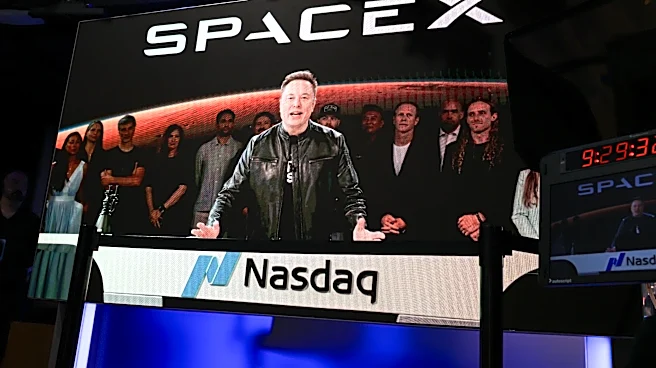
Elon Musk, CEO of Tesla and X (formerly Twitter), has become the world's first trillionaire following SpaceX's successful initial public offering. SpaceX is now valued at over $2 trillion, with Musk's personal fortune reaching $1.27 trillion as of June
15, 2026. This milestone has reignited discussions about wealth distribution and the potential for such vast resources to address global issues. Critics highlight Musk's previous statements about ending world hunger, noting that the United Nations estimated it would cost $93 billion annually to achieve this goal by 2030. Despite his immense wealth, Musk has not taken significant steps to fulfill this promise, leading to public scrutiny over his financial priorities.
Why It's Important?
Musk's unprecedented wealth underscores the growing disparity between the ultra-rich and the general population. In the U.S., where 10.6% lived in poverty in 2024 and 24% of households lived paycheck to paycheck in 2025, the concentration of wealth in the hands of a few individuals raises ethical and economic questions. Musk's fortune could potentially fund significant social programs, such as ending homelessness or supporting public education, yet remains largely untapped for these purposes. This situation highlights the broader debate on the responsibilities of billionaires in addressing societal challenges and the role of government in regulating wealth distribution.
What's Next?
As Musk's wealth continues to grow, there may be increased calls for policy changes, such as higher taxes on the ultra-wealthy, to redistribute resources more equitably. Public pressure could also mount for Musk to take more proactive steps in philanthropy, particularly in areas he has previously expressed interest in, like world hunger. The ongoing discourse may influence future legislative efforts aimed at addressing income inequality and ensuring that the benefits of economic growth are more widely shared.
Beyond the Headlines
The ethical implications of Musk's wealth extend beyond immediate financial considerations. His fortune, partly built on government contracts and consumer investments, reflects broader systemic issues in capitalism and the valuation of tech companies. The societal impact of such concentrated wealth raises questions about the sustainability of current economic models and the potential need for reform. Additionally, Musk's wealth serves as a symbol of the potential for technological innovation to create vast economic value, while also highlighting the challenges of ensuring that such value benefits a broader segment of society.