







What's Happening?
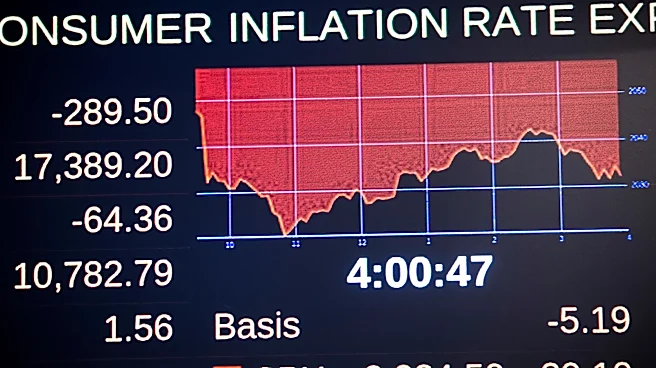
Oil prices experienced a decline on Wednesday following data indicating a significant increase in U.S. crude and fuel inventories. U.S. West Texas Intermediate (WTI) futures fell by 56 cents, or 0.65%, to $85.45 a barrel, while Brent crude futures decreased
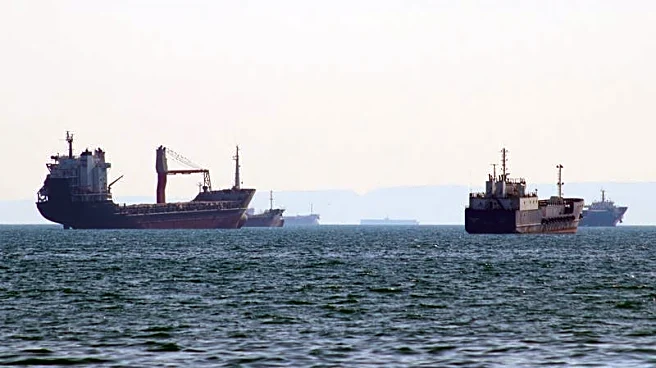
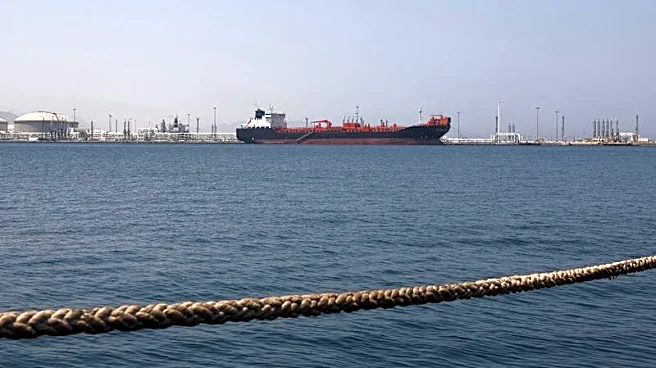
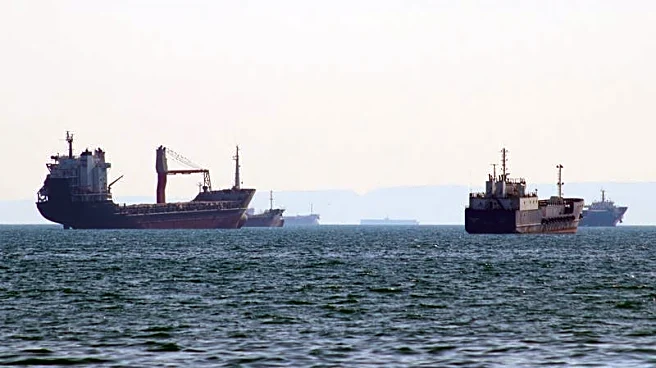
by 16 cents, or 0.17%, to $92.98 a barrel. According to market sources citing American Petroleum Institute (API) data, crude stocks in the U.S. rose by 5.28 million barrels in the week ending November 13. Gasoline stocks also saw an increase of 5.12 million barrels, and distillate inventories grew by 351,000 barrels. This rise in U.S. stockpiles has helped to alleviate some supply concerns in the global market. However, ongoing tensions between the U.S. and Iran, including recent aerial attacks intercepted by Bahrain's defense force and disruptions to shipping through the Strait of Hormuz, have limited a more substantial drop in oil prices. Both oil benchmarks had previously settled higher due to the intensification of the U.S.-Iran conflict and continued supply worries related to attacks on ships in the Strait of Hormuz.
Why It's Important?
The increase in U.S. crude inventories is a significant factor in stabilizing global oil prices, offering a buffer against geopolitical instability. For U.S. consumers and industries, higher stockpiles can translate to more stable or potentially lower fuel costs, impacting sectors like transportation, manufacturing, and logistics. This development could provide some relief from inflationary pressures linked to energy prices. However, the persistent tensions in the Middle East, particularly involving the U.S. and Iran and the critical Strait of Hormuz shipping lane, underscore the fragility of the global oil supply chain. Any escalation in the conflict or further disruptions to shipping could quickly reverse the current downward trend in prices, highlighting the ongoing vulnerability of the market to geopolitical events. The interplay between domestic supply increases and international political risks creates a complex environment for energy policy and economic forecasting.
What's Next?
The oil market will continue to closely monitor both U.S. inventory reports and geopolitical developments in the Middle East. Future data from the American Petroleum Institute and the Energy Information Administration will be crucial in determining the trajectory of U.S. crude and fuel stockpiles. Any further increases could exert additional downward pressure on prices, while unexpected drawdowns could lead to a rebound. On the geopolitical front, the ongoing conflict between the U.S. and Iran, including any further attacks or retaliatory actions, will remain a primary driver of market sentiment. The stability of shipping routes through the Strait of Hormuz will also be a key factor. Stakeholders, including oil producers, refiners, and policymakers, will be watching for signs of de-escalation or further intensification of regional conflicts, which could significantly impact global supply and demand dynamics.
Beyond the Headlines
The current situation highlights a broader dynamic in the global energy market: the tension between increasing domestic supply capabilities and persistent international geopolitical risks. While the U.S. has demonstrated its capacity to build up strategic reserves and increase production, thereby mitigating some price volatility, the global nature of oil markets means that regional conflicts can still have far-reaching effects. This scenario underscores the strategic importance of energy independence and diversified supply chains for national security. Furthermore, the continued reliance on critical chokepoints like the Strait of Hormuz for global oil transit exposes the inherent vulnerabilities in the system. This could accelerate discussions around alternative energy sources and routes, as well as the long-term implications of geopolitical instability on the transition to renewable energy, as nations seek to reduce their exposure to volatile fossil fuel markets.