







What's Happening?
PepsiCo is experiencing growth challenges and has lowered its 2026 earnings growth forecast, expecting core earnings per share to rise 1%-2%, a decrease from its previous outlook of 4%-6%. The company now anticipates core EPS growth of 2.5%-3.5%, down
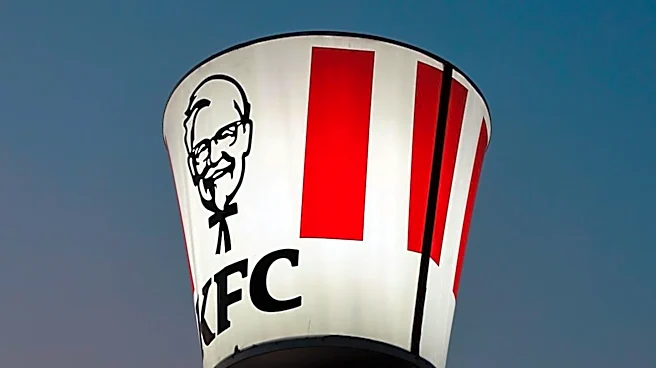
from 5%-7%. This comes as Coca-Cola reported strong fiscal third-quarter results, with revenue increasing 7% year-on-year to $13.4 billion, surpassing analyst estimates. Coca-Cola's global sales volume grew 5%, driven by markets like India, China, Mexico, and Brazil, and its Coca-Cola Zero Sugar volume jumped 16%. In a significant development, KFC, owned by Yum! Brands, announced it would switch to Coca-Cola beverages across the U.S. starting in January 2027, ending PepsiCo's decades-long role as KFC's exclusive U.S. beverage supplier. Coca-Cola products are expected to be available in all U.S. KFC locations by spring 2027.
Why It's Important?
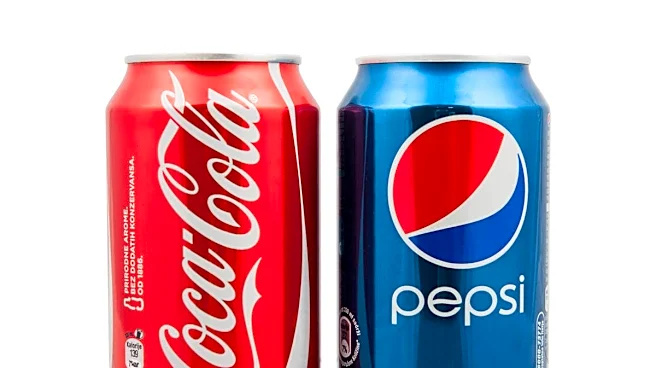
This shift in performance and partnerships has significant implications for the U.S. beverage industry and the competitive landscape between two of its largest players. Coca-Cola's new deal with KFC will expand its reach within the fast-food sector, potentially increasing its market share and customer base. For PepsiCo, losing the KFC partnership represents a notable setback, impacting its distribution channels and brand visibility in a key segment. While PepsiCo trades at a lower valuation with a higher dividend yield, suggesting a potential turnaround opportunity for investors, its revised earnings forecast and the loss of a major client indicate headwinds. The contrasting performances highlight the importance of strategic partnerships and product innovation in maintaining market leadership and investor confidence in the highly competitive U.S. beverage market.
What's Next?
Coca-Cola products are slated to be fully integrated into all U.S. KFC locations by spring 2027, which will likely lead to increased sales volume and market penetration for Coca-Cola in the fast-food sector. PepsiCo will need to strategize on how to mitigate the impact of losing the KFC partnership and address its growth challenges. This could involve focusing on its leading snacks business, introducing new products, and emphasizing affordable pricing, as suggested by Morningstar analysts. Investors will be closely watching both companies' future earnings reports and strategic announcements to assess their long-term growth trajectories and market positions. The retail sentiment, currently 'bullish' for Coca-Cola and 'bearish' for PepsiCo on platforms like Stocktwits, may also influence short-term stock performance.
Beyond the Headlines
The evolving dynamics between Coca-Cola and PepsiCo extend beyond immediate financial results and partnerships, reflecting broader trends in consumer preferences and corporate strategy. Coca-Cola's success with lower-cost options and zero-sugar products indicates a growing consumer demand for healthier or more budget-friendly beverage choices. PepsiCo's potential focus on its snacks business highlights the diversification strategies employed by major food and beverage conglomerates to offset challenges in specific segments. The shift in the KFC partnership also underscores the power of brand loyalty and distribution networks in the fast-food industry. This competitive environment could spur further innovation in product development, marketing, and supply chain efficiency as both companies vie for market dominance and adapt to changing consumer tastes and economic conditions.