







What's Happening?
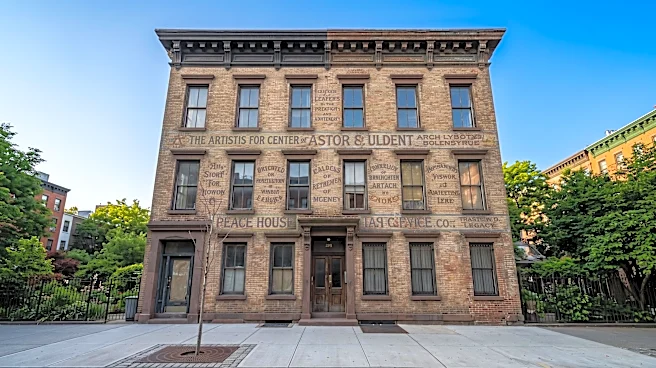
Tami Schneider, founder of Our House NYC, has established a grief support center in Manhattan, which opened in October 2025. This initiative stems from her personal experience of losing her husband, Rick, to brain cancer when she was 42, leaving her to raise
two young children. Schneider recounted the sudden onset of her husband's illness, marked by confused behavior, leading to a brain tumor diagnosis. After Rick's passing, she found herself isolated from her previous social circle and realized the profound need for a community that understood the unique challenges of grief. She initially built her own network of grieving individuals and later sought to formalize this support, inspired by a long-standing model in Los Angeles. Our House NYC aims to provide a structured environment where individuals, children, and families experiencing similar losses can connect and find fellowship, adapting its curriculum to meet specific group needs. The center has already garnered a waitlist, indicating a significant demand for its services.
Why It's Important?
The establishment of Our House NYC addresses a critical gap in mental health and community support services for grieving individuals and families in New York City. Grief, often a stigmatized and isolating experience, can lead to long-term emotional and psychological challenges if not adequately addressed. Schneider's initiative provides a vital platform for shared understanding and healing, particularly for children who have lost a parent, offering a sense of normalcy and connection that traditional therapy might not fully provide. The center's focus on grouping individuals with similar loss experiences ensures more targeted and empathetic support. The immediate waitlist highlights the widespread need for such resources, underscoring the societal impact of unaddressed grief and the potential for Our House NYC to become a crucial resource in fostering resilience and recovery within the community.
What's Next?
Our House NYC is actively seeking more volunteers to lead groups and additional funding to expand its operations, given the current waitlist. The organization's goal is to make grief support more accessible and destigmatize the conversation around loss. Future plans likely involve increasing capacity to serve more individuals and families, potentially through additional locations or expanded program offerings. The success of Our House NYC could also inspire similar initiatives in other cities, promoting a broader shift towards community-based grief support models. Continued efforts to raise awareness and secure resources will be crucial for the center to meet the growing demand and fulfill its mission of ensuring no one grieves alone.
Beyond the Headlines
The story of Our House NYC transcends typical news by highlighting the profound personal and societal implications of grief and the power of community in healing. It underscores how personal tragedy can be a catalyst for creating meaningful social change. The reluctance of many to discuss grief, as noted by Schneider, points to a broader cultural discomfort with death and loss, which often leaves grieving individuals feeling isolated. Our House NYC challenges this by fostering open dialogue and shared experience, potentially shifting societal norms around grief. The center's model, which emphasizes community over individual therapy for certain aspects of grief, suggests a re-evaluation of how mental health support is conceptualized and delivered, recognizing the inherent human need for connection during times of profound sorrow.