



What's Happening?
Dan Ivascyn, Chief Investment Officer at PIMCO, stated on October 13 that U.S. Treasury yields still have room to rise, and the Federal Reserve could implement one to two more rate hikes before the current tightening cycle concludes. While he anticipates
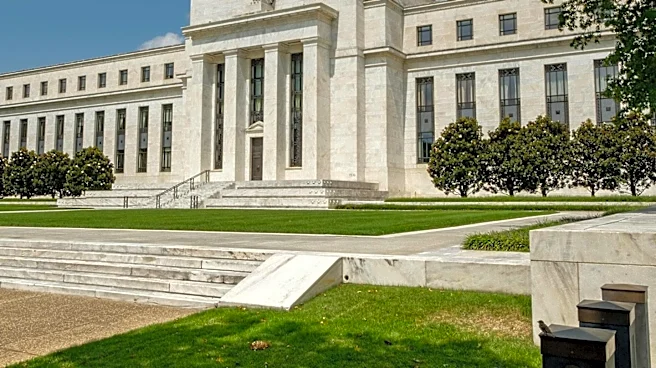
the Federal Open Market Committee (FOMC) will hold policy rates steady at its upcoming meeting later this month, he suggested that another hike could occur in 2026. This outlook is more hawkish than the market's prevailing expectations for early rate cuts. Ivascyn argued that inflationary pressures are not fully contained and that the resilient labor market provides the Fed with ample scope for additional tightening. The 10-year Treasury yield, a benchmark for long-term rates, remains elevated, and investors are divided on its peak.
Why It's Important?
PIMCO's hawkish stance, coming from one of the most influential firms in fixed-income investing, challenges the market's entrenched expectations for early rate cuts and could significantly influence bond investors' policy outlook. If PIMCO's prediction of further rate hikes materializes, it would mean higher borrowing costs for U.S. consumers and businesses, impacting everything from mortgage rates to corporate loans. This could dampen economic growth, as higher interest rates typically slow down spending and investment. For the U.S. Treasury market, continued upward pressure on yields would mean lower bond prices, affecting the portfolios of institutional investors and individual savers. The divergence between PIMCO's view and broader market sentiment highlights the uncertainty surrounding the Fed's future actions and the ongoing debate about the persistence of inflation and the strength of the labor market. This perspective suggests that the Fed may prioritize inflation control over supporting economic growth in the near term.
What's Next?
The Federal Reserve's upcoming FOMC meeting later this month will be a critical event, as market participants will closely watch for any signals regarding future rate decisions. While PIMCO expects a pause at this meeting, the possibility of one to two more tightening moves before the cycle ends, potentially in 2026, means that the Fed's 'wait-and-see' approach could evolve into further action. Investors will be scrutinizing economic data, particularly inflation and labor market reports, to gauge whether the conditions for additional rate hikes are strengthening. The bond market will likely react to any shifts in the Fed's rhetoric or policy, with potential implications for Treasury yields and the broader financial landscape. PIMCO's outlook suggests that market expectations for early rate cuts may be premature, prompting a re-evaluation of investment strategies that are predicated on a swift easing of monetary policy.
Beyond the Headlines
The differing views on the Federal Reserve's future actions, particularly between market expectations and influential investment firms like PIMCO, underscore a deeper uncertainty about the long-term trajectory of the U.S. economy. PIMCO's argument that inflationary pressures are not fully contained, despite some cooling, suggests a concern that underlying economic forces could reignite price increases. This perspective highlights the ongoing challenge for the Fed in navigating a complex economic environment where the labor market remains resilient even as inflation shows signs of moderation. The potential for additional rate hikes, even if modest, could signal a more prolonged period of higher interest rates than many anticipate, leading to a 'higher for longer' scenario. This could have profound implications for capital allocation, corporate profitability, and consumer behavior, as businesses and individuals adjust to a sustained environment of elevated borrowing costs. The debate also touches upon the effectiveness of the Fed's past tightening measures and the potential for unintended consequences if policy decisions are misaligned with economic realities.