






What's Happening?
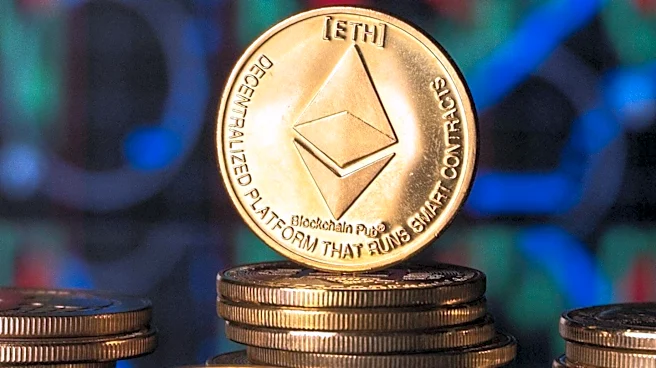
Tom Lee, co-founder of Fundstrat and chairman of BitMine, predicts that Ethereum (ETH) will outperform Bitcoin (BTC) in the upcoming crypto cycle. This forecast is based on the anticipated rise of Wall Street's asset tokenization and the increasing use
of blockchains by AI agents. Lee emphasizes that his prediction is a relative call, meaning he expects ETH to rise faster than Bitcoin, rather than just an absolute increase in dollar value. The ETH/BTC ratio, which measures Ethereum's value against Bitcoin, is a key metric for this prediction. As of November 28, 2026, the ratio stood near 0.028, significantly below its 2021 peak of approximately 0.08. Lee suggests that if Bitcoin reaches $150,000 and the ETH/BTC ratio hits 0.04, Ethereum could trade near $6,000, with some forecasts even placing it between $9,000 and $12,000 by year-end. BitMine, the company Lee chairs, holds nearly 5% of the ETH supply and has been consistently buying ETH since June 30, 2025, demonstrating conviction in this outlook.
Why It's Important?
This prediction holds significant importance for the U.S. cryptocurrency market and broader financial landscape. If Ethereum indeed outperforms Bitcoin, it could signal a shift in investor sentiment and capital allocation within the digital asset space, potentially drawing more institutional interest towards Ethereum's ecosystem. The underlying drivers of Lee's prediction—asset tokenization and AI agent adoption—represent major technological and financial trends. The tokenization of real-world assets on blockchains, particularly Ethereum, could revolutionize how traditional financial instruments are traded and managed, potentially increasing efficiency and accessibility. Furthermore, the integration of AI agents with blockchain technology could create new demand for Ethereum's network as these agents require a decentralized and secure platform for transactions and operations. This could lead to increased network usage, higher transaction fees, and a stronger economic model for Ethereum, benefiting investors and developers in the U.S. who are heavily invested in or building on the Ethereum platform. Conversely, if the prediction does not materialize, it could lead to investor disappointment and a re-evaluation of Ethereum's long-term growth prospects relative to Bitcoin.
What's Next?
Investors and market observers will closely monitor several key indicators to assess the validity of Tom Lee's Ethereum prediction. The ETH/BTC ratio will be a primary metric, with a sustained increase above its current level of 0.028 being crucial for the prediction's progression. BitMine's weekly holdings updates will also provide insight into the company's continued conviction and investment in Ethereum. Furthermore, the growth of stablecoin and tokenization activity on the Ethereum network will be a critical factor, as Lee's thesis heavily relies on Wall Street's adoption of asset tokenization. The actual usage figures for AI agent activity on Ethereum will also be scrutinized, as this is currently the least proven argument in Lee's case. Any significant developments in these areas, such as new partnerships for tokenization or increased AI-driven transactions, could either strengthen or weaken the prediction. The market's reaction to these developments will determine whether Ethereum can achieve the projected price targets and outperform Bitcoin.
Beyond the Headlines
The deeper implications of Tom Lee's prediction extend beyond mere price movements, touching upon the evolving roles of major cryptocurrencies and the future of decentralized finance. If Ethereum successfully becomes the primary settlement layer for tokenized assets and AI agents, it could solidify its position as a foundational infrastructure for the next generation of digital economy. This shift could challenge Bitcoin's long-standing dominance as the leading cryptocurrency, potentially leading to a more diversified crypto market where different blockchains specialize in distinct functions. The ethical and regulatory considerations surrounding asset tokenization and AI's interaction with blockchain are also significant. As more traditional assets move onto blockchain, regulators will need to establish clear frameworks to ensure investor protection and market stability. Similarly, the autonomous nature of AI agents operating on blockchains raises questions about accountability and control. The success of Lee's prediction could accelerate these discussions, prompting policymakers and industry leaders to address these complex issues, ultimately shaping the legal and operational landscape for digital assets in the U.S. and globally.