




What's Happening?
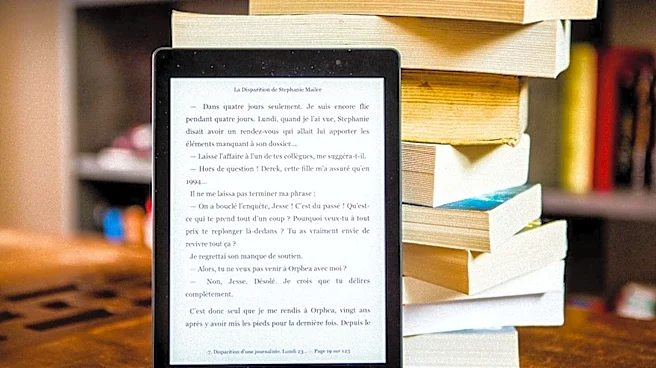
A new study, cited by the Association of American Publishers (AAP) and the Authors Guild, suggests a direct correlation between increased library e-lending and a decline in print book sales. The study indicates that for every one percentage point increase in the share
of e-books in public libraries, consumer print sales decline by approximately 0.85% to 1%, with adult fiction being at the higher end of this range. This research reignites a long-standing debate between publishers and libraries regarding the economic impact of digital lending. Publishers argue that increased e-lending without appropriate compensation models erodes their revenue and authors' royalties, while libraries emphasize their role in providing equitable access to information and promoting literacy. The study's findings are being used to advocate against state-level laws that would impose licensing terms on publishers, making it easier for libraries to acquire e-books at lower prices.
Why It's Important?
This study is highly significant for the U.S. publishing industry, authors, and public libraries. For publishers and authors, it provides data to support their claims that current e-lending models negatively impact their financial viability, potentially leading to reduced investment in new titles and authors. This could affect the diversity and availability of books in the market. For libraries, the study presents a challenge to their mission of universal access, as publishers may push for stricter licensing terms or higher prices for e-books. The debate also has implications for readers, who could face reduced access to digital content through libraries or higher prices for purchased books. The outcome of this discussion could shape future legislation regarding digital content licensing and the economic models that govern the relationship between creators, distributors, and consumers of books.
What's Next?
The findings of this study are expected to intensify lobbying efforts by the AAP and Authors Guild to influence state legislatures against imposing mandatory e-book licensing terms on publishers. Libraries and their advocates will likely counter these arguments, emphasizing the public service aspect of e-lending and the role libraries play in fostering reading and literacy. The debate may lead to renewed negotiations between publishers and library consortia to find mutually agreeable licensing models that balance author compensation with public access. Indie authors, who can set their own library pricing through platforms like OverDrive, will need to consider these market dynamics when determining their strategies. Further research and economic analyses are likely to emerge as stakeholders seek to strengthen their positions in this ongoing discussion.
Beyond the Headlines
The controversy surrounding library e-lending and its impact on print sales touches upon fundamental questions about intellectual property in the digital age and the public good. It highlights the tension between the commercial interests of creators and publishers, and the societal mission of libraries to provide free and equitable access to knowledge. This debate is not just about economics; it's about the future of authorship as a sustainable profession and the role of public institutions in a digital society. The study's findings could inadvertently create a divide between authors who rely on sales and those who value broader readership through libraries. Ultimately, finding a balanced solution will require innovative thinking that respects both the rights of creators to be compensated and the public's right to access information, potentially leading to new models of public-private partnership in content distribution.