




What's Happening?
The 2026 Tour de France has been marked by unprecedented heat, prompting significant adaptations in athlete training methods. Olav Aleksander Bu, a coach known for the Norwegian method of endurance training, has been at the forefront of preparing athletes
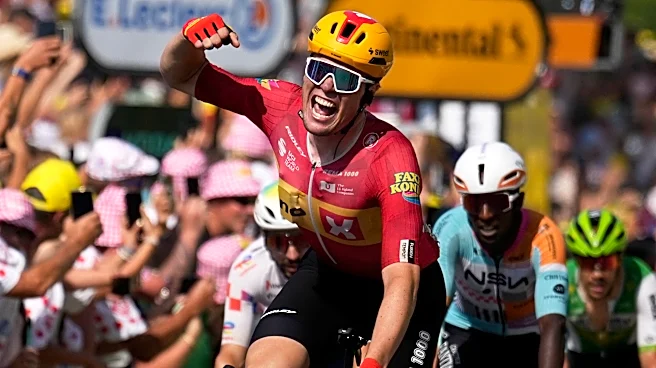
to compete in extreme heat. His approach involves controlled exposure to high temperatures to build tolerance and enhance performance. This method has been particularly beneficial for the Uno-X Mobility team, which has seen success despite the challenging conditions. The Tour de France had to shorten a stage for the first time in its history due to the heat, highlighting the severity of the situation.
Why It's Important?
The adaptation to extreme heat is becoming increasingly crucial as climate change leads to more frequent and intense heatwaves. This development has significant implications for the future of sports, as traditional training methods may no longer suffice. Athletes and teams that can effectively adapt to these conditions may gain a competitive edge. Moreover, the success of the Norwegian method could influence training protocols across various sports, potentially leading to broader changes in how athletes prepare for competitions. This shift underscores the growing need for innovative solutions in response to environmental challenges.
What's Next?
As temperatures continue to rise, sports organizations may need to implement more drastic measures to ensure athlete safety and performance. This could include altering competition schedules, investing in new technologies for heat management, and further research into effective training methods. The success of the Norwegian method may prompt other teams and sports to adopt similar strategies, potentially leading to a widespread reevaluation of training practices. Additionally, there may be increased interest in developing wearable technology to monitor body temperature and prevent heat-related health issues.
Beyond the Headlines
The focus on heat adaptation in sports also raises questions about the long-term sustainability of traditional sporting events in their current formats. As climate change progresses, the feasibility of hosting events like the Tour de France in their traditional locations and times of year may be challenged. This situation highlights the broader impact of climate change on cultural and recreational activities, prompting discussions about how society can adapt to these changes while preserving the integrity and spirit of sports.