
What's Happening?
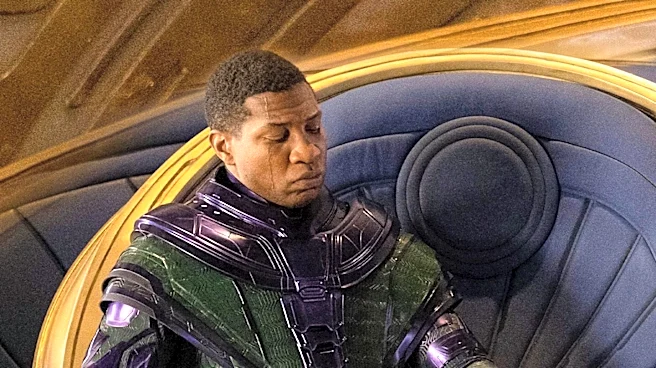
Marvel Studios is under examination for its handling of the Kang the Conqueror character following the decision to sever ties with actor Jonathan Majors in December 2023. The verdict against Majors led to his immediate departure, prompting discussions
about recasting the role. While Marvel has previously recast major characters without significant fan backlash, such as the Hulk, the studio's subsequent decision to reportedly pivot away from Kang as a central villain in favor of Doctor Doom has raised questions. Showrunner Beau DeMayo confirmed that initial plans for 'X-Men '97' season 2 involved Majors portraying the Rama-Tut version of Kang, a role now voiced by John de Lancie. This quiet recasting in an animated series suggests a path for live-action, yet Marvel's public narrative, as conveyed by Kevin Feige to The Hollywood Reporter, indicates a shift away from Kang due to the character not being deemed 'Thanos-level' enough, a claim that some find questionable given the extensive setup for Kang across multiple projects.
Why It's Important?
This situation is important for the entertainment industry, particularly for major studios like Marvel, as it highlights the complex interplay between creative vision, financial considerations, and ethical decisions in response to real-world events involving talent. The decision to move away from a character after significant investment in its development, rather than simply recasting, could set a precedent for how studios manage similar crises. It also impacts the long-term narrative coherence of the Marvel Cinematic Universe (MCU), which had meticulously built up Kang as the central antagonist for the 'Multiverse Saga.' The perceived 'fumbling' of Kang, despite having in-story mechanisms for character variants and recasting, could affect audience trust and engagement with future storylines. Furthermore, the public's reaction and suggestions for new actors like Aldis Hodge demonstrate the power of fan engagement and its potential influence on studio decisions, even if not directly adopted.
What's Next?
The immediate future for Marvel involves navigating the transition to Doctor Doom as a primary antagonist, with the character's introduction in 'Fantastic Four: First Steps' and a potential major role in 'Secret Wars' in 2027. This shift will require careful storytelling to ensure Doom's motivations and impact resonate with audiences, especially after the extensive setup for Kang. There remains a possibility that Marvel could revisit a live-action recasting of Kang in the future, particularly for events like 'Secret Wars,' given the character's inherent 'variant' nature. The success of the animated 'X-Men '97' recasting of Rama-Tut could serve as a blueprint for a less controversial reintroduction. The industry will also be watching how Marvel manages public perception and narrative consistency as it moves forward from the Jonathan Majors controversy and redefines its overarching villain arc.
Beyond the Headlines
Beyond the immediate casting and narrative implications, this event touches upon broader ethical and business considerations within Hollywood. The swift termination of Majors' contract post-verdict underscores the industry's increasing sensitivity to public image and legal outcomes involving its talent. It also raises questions about the long-term planning and adaptability of massive cinematic universes; while Marvel had a built-in solution for recasting through the 'variant' concept, the apparent reluctance to utilize it for Kang in live-action suggests deeper strategic shifts or concerns. This situation could influence how studios approach long-term character arcs and talent contracts, potentially leading to more contingency planning for key roles. The debate over whether the character was 'big enough' for the big screen also highlights the constant pressure on studios to deliver 'Thanos-level' threats, potentially leading to a cycle of escalating stakes that can be difficult to sustain creatively.