






What's Happening?
Salina, Kansas, is transforming into a significant logistics powerhouse, leveraging its strategic geographic location at the intersection of Interstate 135 and K-140. This positioning places the city within a one-day truck drive of nearly one-third of the U.S.
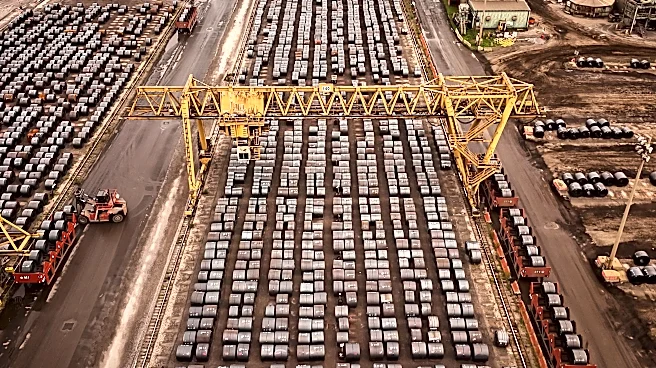
population, making it an attractive hub for national distribution operations. The city's ascendancy is driven by a combination of geographic advantages, substantial corporate investments, and collaborative public-private initiatives. The Salina Regional Industrial Park has undergone aggressive expansion, providing large parcels of land with immediate access to essential utilities and infrastructure designed to meet the demands of modern logistics firms, including high clear-span warehouses and heavy-duty electrical capacity for automated systems. Key components of this growth include direct access to major transportation corridors like I-135 and rail spurs connecting to the BNSF network, robust utility capacity, and the development of workforce housing to support the growing industrial base. This strategic development has attracted major national retailers and third-party logistics providers, establishing regional sorting and fulfillment centers and creating hundreds of jobs with wages above the local average.
Why It's Important?
The rise of Salina as a logistics hub has significant implications for regional employment, mobility, and the broader U.S. supply chain. The creation of hundreds of jobs with competitive wages and benefits offers stability in an economy often marked by seasonal fluctuations, providing career pathways beyond temporary roles. The economic impact extends beyond the industrial parks, benefiting local suppliers of maintenance, security, and technology services, as well as restaurants and service businesses. The expansion of the tax base funds improvements in schools and public infrastructure, enhancing the quality of life for the entire region. For U.S. industries, Salina offers a centrally located, technologically integrated, and reliable distribution point, potentially reducing transportation costs and improving delivery times for goods across the country. This model demonstrates how strategic infrastructure development and public-private partnerships can transform smaller cities into critical nodes within national supply chains, fostering economic resilience and growth in unexpected areas. The focus on workforce development, through partnerships with community colleges, ensures a skilled labor pool capable of managing modern, tech-driven warehouse operations, addressing a critical need in the evolving logistics sector.
What's Next?
Salina faces the ongoing challenge of managing its rapid industrial growth sustainably. This includes continued investment in infrastructure to support expanding operations and address increased traffic flow on key arterials. City planners are adopting a proactive stance in zoning and infrastructure investment to balance industrial expansion with the preservation of residential character. The city is actively partnering with companies that invest in automation while simultaneously focusing on workforce training initiatives. Partnerships with local community colleges are crucial, with programs in logistics management, warehouse technology, and supply chain operations designed to align local workforce skills with the needs of modern distribution centers. The goal is to build a resilient economic ecosystem that can adapt to future changes in the logistics industry, ensuring that the city remains attractive to both employers and employees. This forward-looking approach aims to transform Salina from a regional trade center into a vital node in the national and global supply chain, with continued efforts to develop a broader economy beyond just warehouse space.
Beyond the Headlines
The transformation of Salina highlights a broader trend in the U.S. economy: the decentralization of logistics and the emergence of new economic centers in previously overlooked regions. This shift is driven by the increasing complexity of supply chains, the demand for faster delivery, and the strategic advantage of central locations. The emphasis on public-private collaboration and master planning for industrial development in Salina provides a blueprint for other communities seeking to capitalize on their geographic advantages. Ethically, the focus on creating stable, well-paying jobs and investing in workforce development addresses concerns about job displacement due to automation, ensuring that technological advancements benefit the local population. Culturally, the growth presents a challenge in maintaining community identity while integrating a rapidly expanding industrial presence. The long-term success of Salina will depend on its ability to continuously adapt its infrastructure, workforce, and community planning to the evolving demands of the logistics industry, potentially setting a precedent for sustainable economic development in the heartland.