







What's Happening?
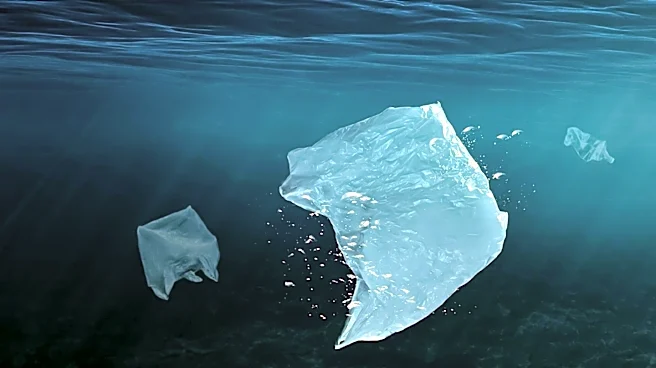
The International Chamber of Commerce (ICC) is actively urging governments and businesses to prioritize innovation in plastics alternatives to address global plastic pollution. The ICC has called for an ambitious, workable, effective, and inclusive agreement
at the Intergovernmental Negotiating Committee (INC-5) to rally all societal actors, including the business community, in the collective effort to end plastic pollution. They emphasize the need for a framework that accelerates business action and supports sustainability-by-design approaches for a more circular economy. The ICC highlights that while reducing, reusing, and recycling are essential, they are often insufficient as downstream solutions. Instead, attention must shift upstream to innovation in materials, processes, and production systems, including the adoption of 'Replacement' as a complementary strategy to improve material choices and enable sustainable end-of-life solutions. The organization stresses that practical business experience is crucial in these global discussions.
Why It's Important?
The ICC's focus on upstream innovation in plastics alternatives is critical for the U.S. and global industries. The current reliance on downstream solutions like recycling has proven inadequate in stemming the tide of plastic pollution. By advocating for 'Replacement' and sustainability-by-design, the ICC is pushing for a fundamental shift in how products are conceived and manufactured. This approach could spur significant investment and research in new materials and production technologies within the U.S. manufacturing sector, creating new industries and jobs. It also presents a challenge to existing industries heavily reliant on conventional plastics, requiring them to adapt or risk obsolescence. The call for harmonized principles and standards could streamline international trade and facilitate the adoption of sustainable practices across borders, benefiting U.S. companies operating globally. Ultimately, this initiative aims to mitigate the environmental and economic costs associated with plastic pollution, which impacts U.S. coastal communities, fisheries, and public health.
What's Next?
The ICC's advocacy will likely continue to influence ongoing UN plastics treaty negotiations, pushing for a legally binding global plastics treaty that incorporates these innovative approaches. Businesses, particularly in the U.S., will face increasing pressure to invest in research and development for plastics alternatives and to integrate sustainability-by-design into their operations. This could lead to new partnerships between technology companies, material science firms, and manufacturers. Governments may introduce policies and incentives to encourage the scaling of these innovations, such as grants for R&D, tax breaks for sustainable manufacturing, or regulations promoting circular economy principles. The challenge will be to move promising innovations from technical feasibility to industrial reality, requiring significant capital investment and a supportive regulatory environment. The success of these efforts will depend on collaboration across value chains and a shared commitment to reducing the environmental footprint of plastics.
Beyond the Headlines
The push for plastics alternatives and a circular economy by the ICC has deeper implications for consumer culture and resource management. It challenges the linear 'take-make-dispose' model that has dominated industrial production for decades, promoting a more regenerative approach where materials are kept in use for as long as possible. This shift could lead to a re-evaluation of product lifecycles, encouraging durability, repairability, and recyclability from the outset. Ethically, it addresses the responsibility of producers for the entire lifecycle of their products and the environmental impact they generate. Culturally, it could foster a greater appreciation for sustainable consumption and a reduction in single-use plastics. The long-term success of these initiatives could redefine economic value, moving beyond mere production volume to encompass resource efficiency and environmental stewardship, ultimately contributing to a more resilient and sustainable global economy.