





What's Happening?
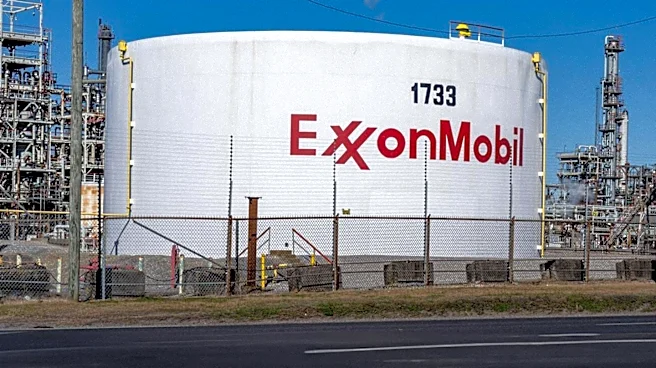
ExxonMobil announced a 3.9% increase in its quarterly dividend, raising it to $1.07 per share. This marks the 44th consecutive year the company has increased its dividend, demonstrating a consistent commitment to shareholder returns. In addition to the dividend hike,
ExxonMobil plans to execute $20 billion in share buybacks in 2027. The company's strong financial performance, including over $39 billion in free cash flow through the first nine months of the year, underpins these capital return initiatives. In the third quarter, ExxonMobil's net income more than doubled year-over-year to $15.4 billion, contributing to a total of $34.1 billion in earnings for the first three quarters of 2026. While upstream performance showed a 16% earnings growth, the downstream segment experienced a significant surge, with earnings from energy products increasing by 303% to nearly $16 billion. This robust performance is partly attributed to disruptions in oil and gas markets, particularly the ongoing conflict impacting the Strait of Hormuz.
Why It's Important?
ExxonMobil's consistent dividend growth streak, now at 44 years, is a significant indicator of its financial stability and disciplined capital management, making it an attractive option for income-focused investors. The planned $20 billion in share buybacks for 2027 further signals the company's confidence in its future earnings and its dedication to enhancing shareholder value by reducing the number of outstanding shares. This move can boost earnings per share and potentially increase the stock price. The company's ability to fund these substantial capital returns, even amidst market volatility, highlights its resilient integrated business model and strategic focus on low-cost assets. The strong performance of its downstream operations, in particular, demonstrates its capacity to capitalize on market conditions and generate significant profits, which is crucial for maintaining investor confidence and attracting new capital. This financial strength allows ExxonMobil to navigate geopolitical tensions and energy market fluctuations effectively.
What's Next?
ExxonMobil's continued financial strength and commitment to shareholder returns suggest a stable outlook for investors. The company aims to further lower its portfolio break-even price to $35 per barrel by 2027 and $30 per barrel by 2030, indicating a focus on operational efficiency and cost reduction. While share repurchases can fluctuate, the company's long-standing dividend growth record is expected to continue, with management prioritizing consistent increases. Investors may monitor global geopolitical developments, particularly those affecting key shipping lanes like the Strait of Hormuz, as these can significantly impact oil and gas prices and, consequently, ExxonMobil's earnings. The company's strategic investments in projects like the Longtail development in Guyana are also expected to contribute to future earnings and cash flow, supporting its capital return programs. The stock's recent performance, up 38% since the start of the year, suggests that while it remains a strong investment, potential buyers might consider waiting for market pullbacks.
Beyond the Headlines
ExxonMobil's ability to consistently raise its dividend for 44 years, even through economic downturns and energy market volatility, speaks to the fundamental resilience of its integrated business model. This long-term commitment to shareholders positions it as a 'Dividend Aristocrat' and nearly a 'Dividend King,' a rare achievement that underscores its financial discipline and strategic foresight. The substantial share buyback program, alongside dividend increases, reflects a broader trend among mature, cash-rich companies to return capital to shareholders, which can be seen as a vote of confidence in their long-term value. However, it also raises questions about the allocation of capital between shareholder returns and investments in new energy technologies or diversification efforts. While ExxonMobil is pursuing lower-emission solutions, the primary focus on traditional oil and gas operations for these returns highlights the ongoing reliance on fossil fuels for profitability, even as the global energy landscape shifts towards sustainability. The company's strategic asset management and cost-reduction efforts are critical in navigating this evolving environment.