




What's Happening?
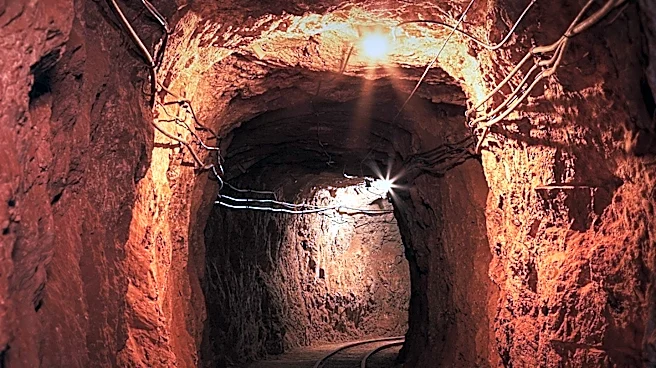
India has recommenced discussions with Zambia regarding investment opportunities in critical minerals, including copper and cobalt. Officials from India’s Ministry of Mines held preliminary talks with their Zambian counterparts on August 26. This renewed
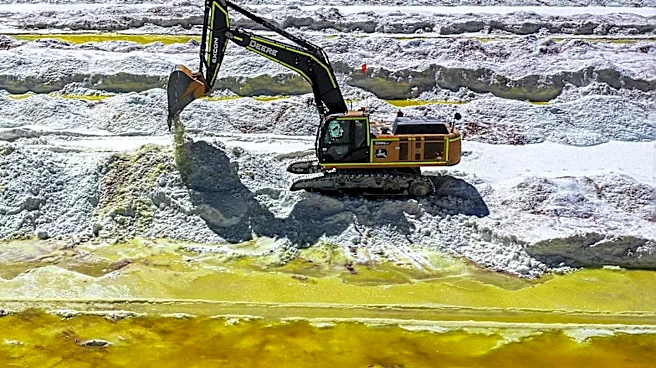
engagement follows a previous stall in negotiations, reported in April, which was attributed to a lack of assurances from Lusaka concerning mining rights for a 9,000 square kilometer area awarded to India last year. India's intensified efforts to secure critical mineral supplies globally, including in Africa, Australia, and Latin America, are driven by concerns over tightening global supply chains and China's dominance in the critical minerals market. India's state-owned enterprise, Khanij Bidesh India Ltd, is actively evaluating investment opportunities in various countries to diversify its mineral sources. The Federation of Indian Mineral Industries advocates for Indian companies to focus on brownfield and near-production projects, alongside long-term offtake arrangements.
Why It's Important?
This development is crucial for India's economic growth and its strategic goal of reducing reliance on specific countries for critical minerals. India is the world's second-largest buyer of refined copper, and its copper imports have significantly increased since the 2018 closure of Vedanta’s Sterlite Copper smelter. Projections indicate that India may need to import 91% to 97% of its copper concentrates by 2047. Securing access to critical minerals like copper and cobalt is vital for India's burgeoning electric vehicle and mobile phone battery industries, as well as for power generation, electronics, and construction. The global race for these minerals is intensifying, with China currently controlling over 90% of the global supply of rare earth elements. India's proactive approach aims to bolster its supply chain security and mitigate potential disruptions, which could have significant implications for its industrial development and technological advancement.
What's Next?
The renewed discussions between India and Zambia are expected to focus on resolving the previous obstacles related to mining rights and establishing clear frameworks for investment. India's Ministry of Mines and Khanij Bidesh India Ltd will likely continue to pursue government-to-government agreements and evaluate various projects in Zambia and other mineral-rich nations. The outcome of these talks will determine the extent of Indian investment in Zambia's mining sector and its ability to secure long-term supplies of critical minerals. Further negotiations will likely address the specifics of mining rights, project development, and potential long-term offtake agreements. The broader strategy involves strengthening bilateral cooperation with countries possessing rich mineral resources to ensure a stable and diversified supply chain for India's growing economy.
Beyond the Headlines
The global competition for critical minerals highlights a fundamental shift in geopolitical and economic strategies, moving beyond traditional energy sources to raw materials essential for modern technology and green energy transitions. India's push into Africa for these resources underscores a broader trend among major economies to secure strategic assets, which can lead to increased foreign investment in developing nations but also raise questions about resource sovereignty and equitable benefit-sharing. The emphasis on brownfield and near-production projects suggests a pragmatic approach to quickly integrate new supplies into India's industrial base. This scramble for resources could reshape international alliances and trade relationships, potentially leading to new economic corridors and increased diplomatic engagement in resource-rich regions. The long-term implications include the potential for enhanced economic development in host countries, but also the risk of exacerbating environmental concerns if mining practices are not sustainably managed.