





What's Happening?
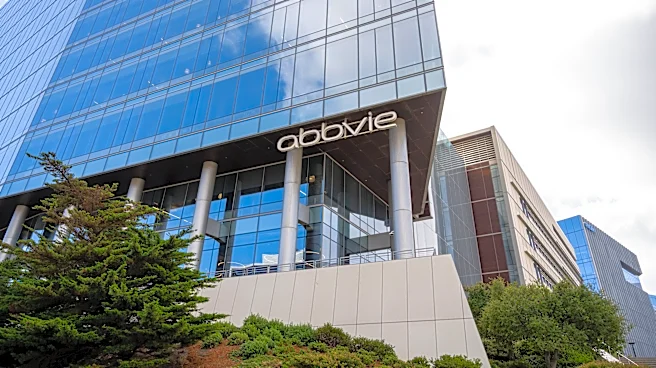
AbbVie is actively expanding its therapeutic focus beyond its traditional strength in immunology, where its former blockbuster Humira once dominated. The company is making significant investments in research and development, with an adjusted investment of
approximately $13.8 billion in 2025. This strategy includes strategic acquisitions such as Capstan Therapeutics, acquired for up to $2.1 billion in 2025, providing access to in vivo cell therapy technologies. Additionally, AbbVie secured a $10.9 billion acquisition of Apogee Therapeutics this year, which has expanded its immunology pipeline with investigational treatments for atopic dermatitis, asthma, and chronic obstructive pulmonary disease. The company is also employing a unique 'reverse translation' approach to drug research, analyzing patient samples to better understand treatment biology and identify new therapeutic targets.
Why It's Important?
This diversification and innovation strategy is critical for AbbVie to maintain its leading position in the pharmaceutical industry, especially as it faces the patent cliff of its former top-selling drug, Humira. By investing heavily in R&D and making strategic acquisitions, AbbVie is building a robust pipeline across multiple therapeutic areas, including neuroscience, oncology, and new immunology treatments. This approach reduces the company's reliance on a single drug or therapeutic area, mitigating financial risks and ensuring long-term growth. The 'reverse translation' method could lead to more effective and targeted treatments, potentially transforming patient care and solidifying AbbVie's reputation as an innovator in drug discovery.
What's Next?
AbbVie is projected to hold the No. 2 spot in worldwide sales in the coming years, driven by the success of its autoimmune disease treatment Skyrizi, which is estimated to be the second-best-selling drug globally by 2032. The company's continued focus on M&A and its 'reverse translation' research approach are expected to define its future pipeline, potentially leading to new drugs and treatment pathways, including a possible entry into the obesity market. While facing stiff competition in the rapidly growing immunology field, AbbVie's strategic investments aim to keep it at the forefront of pharmaceutical innovation and market leadership.
Beyond the Headlines
The 'reverse translation' approach adopted by AbbVie signifies a paradigm shift in drug development. Instead of the traditional lab-to-patient model, this method starts with insights from patient samples to identify biological pathways that current treatments might not fully address. This patient-centric research could lead to the discovery of novel drug targets and more personalized medicine, ultimately improving outcomes for patients who do not respond adequately to existing therapies. This innovative strategy not only enhances AbbVie's competitive edge but also contributes to the broader scientific understanding of disease mechanisms, potentially benefiting the entire healthcare ecosystem.