


What's Happening?
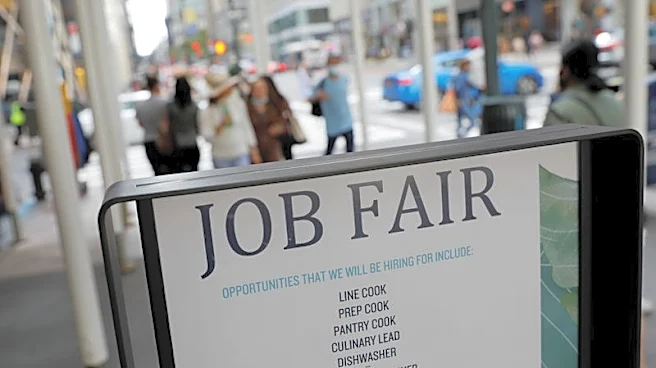
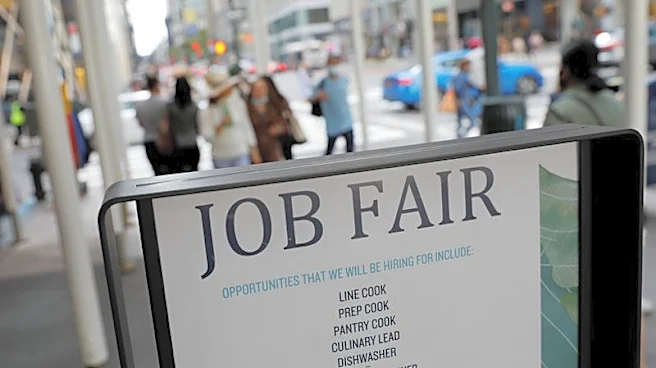
The US economy experienced an unexpected loss of 23,000 jobs in July, according to the Bureau of Labor Statistics. The unemployment rate decreased slightly to 4.1% as more individuals left the labor force. This decline in job numbers marks a significant
slowdown from previous months, with revisions showing lower job gains in May and June. The report highlights a cautious hiring environment, influenced by factors such as an aging population, AI adoption, and geopolitical tensions. The healthcare and social assistance sector continued to add jobs, while other industries faced losses, particularly in local government and leisure and hospitality.
Why It's Important?
The unexpected job losses signal potential challenges for the US economy, affecting consumer confidence and spending. The cautious hiring environment may impact economic growth and stability, with implications for monetary policy and interest rates. The reliance on specific sectors for job growth highlights vulnerabilities in the labor market, which could affect long-term economic resilience. The report may influence Federal Reserve decisions regarding interest rates and inflation targets.
What's Next?
Economists and policymakers will closely monitor upcoming economic data, including inflation reports, to assess the broader impact of job losses. The Federal Reserve may adjust its monetary policy in response to labor market trends and inflation dynamics. Businesses may continue to navigate uncertainties, potentially affecting hiring and investment decisions.
Beyond the Headlines
The job market challenges underscore the need for strategic workforce planning and adaptation to technological changes. The focus on healthcare job growth highlights the sector's critical role in economic stability and resilience. The situation may prompt discussions about the future of work and the impact of demographic shifts on labor market dynamics.