






What's Happening?
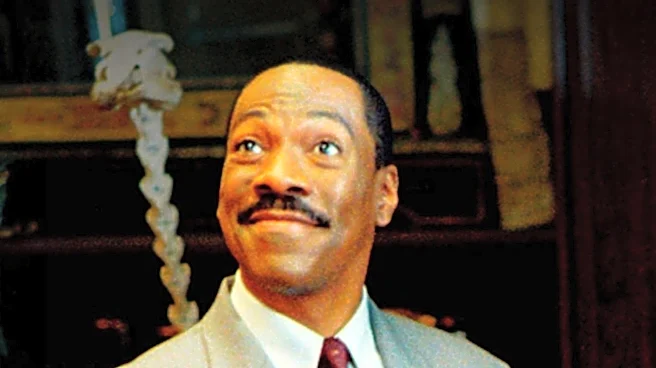
Eddie Murphy's 1995 film 'Vampire in Brooklyn,' initially panned by critics upon its release, is now being re-evaluated and celebrated as a cult classic. The film, directed by horror veteran Wes Craven, blended the vampiric horror genre with comedy, a combination
that was not well-received by contemporary critics. However, nearly three decades later, critics and audiences alike are recognizing its value, particularly for its fresh take on the vampire mythos and its predominantly Black cast. Murphy's performance as the ancient bloodsucking vampire Maximilian, alongside Angela Bassett as New York City Detective Rita Veder, is highlighted as a key strength. The movie is noted for diversifying the vampire lore by incorporating West Indian and Caribbean folklore elements and setting the story in an urban Brooklyn environment, making it relatable to a broader audience.
Why It's Important?
The re-evaluation of 'Vampire in Brooklyn' underscores a significant shift in critical reception and cultural appreciation for films that initially faced backlash. This phenomenon highlights how certain movies, particularly those that challenge genre conventions or feature underrepresented narratives, can gain a cult following over time. For the U.S. film industry, this reassessment emphasizes the importance of diverse storytelling and the long-term impact of films that resonate with specific cultural groups, even if mainstream critics initially overlook them. It also demonstrates the enduring appeal of Eddie Murphy's comedic and acting range, as well as Angela Bassett's powerful performances. The film's success in blending horror and comedy, and its role in opening doors for more African-American horror movies, signifies its lasting contribution to cinematic history and its influence on subsequent genre productions.
What's Next?
The renewed interest in 'Vampire in Brooklyn' could lead to increased viewership on streaming platforms where it is available, such as Hulu and Amazon. This resurgence might also inspire new critical analyses, documentaries, or retrospectives on the film's impact and its place within the horror-comedy genre and African-American cinematography. For the entertainment industry, the film's journey from critical failure to cult classic could encourage more studios to take risks on unconventional projects and diverse narratives, understanding that audience appreciation can evolve over time. It may also prompt a re-examination of other films that were initially dismissed but hold cultural significance for specific communities.
Beyond the Headlines
The story of 'Vampire in Brooklyn' transcends its initial critical reception to reveal deeper insights into cultural representation and the evolution of cinematic taste. By centering a predominantly Black cast and infusing the vampire mythos with non-European folklore, the film challenged the traditionally Eurocentric portrayal of vampires in popular culture. This aspect is crucial for understanding how cinema can reflect and shape cultural identities, offering narratives that resonate with diverse audiences. The film's journey to cult status also highlights the subjective nature of art criticism and the power of audience engagement in shaping a film's legacy. It serves as a reminder that a film's true impact may not be immediately apparent but can unfold over decades, influencing future generations of filmmakers and viewers.