



What's Happening?
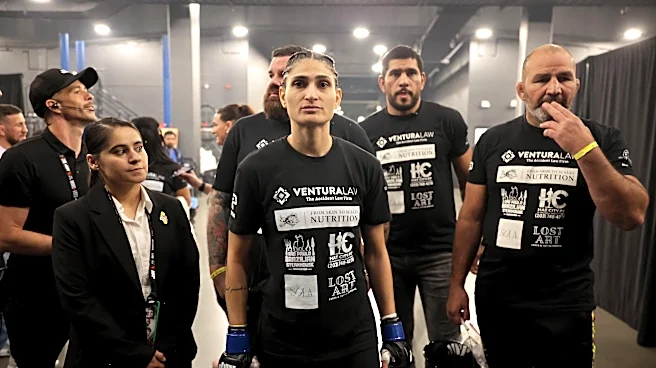
Bella Mir, daughter of UFC legend Frank Mir, is pursuing a career in mixed martial arts but is determined to avoid the long-term physical and neurological damage her father sustained. Following her first professional MMA loss in Dana White's Contender
Series, Mir reflected on the similarities and differences in their careers. She noted that while she aspires to win a UFC title like her father, she does not wish to endure the same level of physical toll. Frank Mir, who retired with a 19-13 record and 10 knockout losses, has experienced significant health issues, including multiple surgeries for his neck, back, hips, and knees, and according to Bella, his brain health is 'not good today.' Bella, a collegiate wrestling standout and NCAA Division-I champion, aims for faster finishes in her fights to minimize damage and hopes to have a career that allows her to 'function afterwards completely normal.'
Why It's Important?
Bella Mir's candid comments shed light on the critical issue of fighter safety and long-term health in combat sports. Her perspective, informed by her father's experiences, highlights the growing awareness within the MMA community about the cumulative effects of head trauma and physical wear and tear. This is important for the sport's evolution, as it encourages discussions around fighter welfare, medical advancements, and potentially, changes in training methodologies and fight frequency. For aspiring fighters, Mir's approach emphasizes strategic fighting to minimize damage, which could influence how future generations approach their careers. Her story also adds a personal dimension to the broader conversation about the risks and rewards of professional fighting, resonating with fans and stakeholders who are increasingly concerned about athletes' post-career quality of life.
What's Next?
Bella Mir will continue her MMA career with a conscious effort to minimize damage, likely focusing on efficient fighting techniques and seeking quick finishes. Her recent loss in the Contender Series means she will need to secure more victories to earn a UFC contract. She also plans to continue her collegiate wrestling career, aiming for the Olympics, which will further develop her grappling skills and provide a strong foundation for her MMA pursuits. The ongoing discussions about fighter health, potentially spurred by stories like the Mirs', may lead to further research into brain health in combat sports, improved medical protocols, and increased support for retired athletes. Her journey will be closely watched as she navigates the demanding world of professional fighting while prioritizing her long-term well-being.
Beyond the Headlines
Bella Mir's situation touches upon the ethical responsibilities of sports organizations and commissions to protect athletes. The contrast between her aspirations and her father's health struggles underscores the inherent dangers of combat sports and the need for continuous improvement in safety measures. This narrative also highlights the intergenerational impact of athletic careers, where the consequences of one generation's sacrifices become lessons for the next. The increasing transparency around fighter health, often driven by athletes and their families, contributes to a more informed public and puts pressure on the industry to evolve. Furthermore, Mir's dual pursuit of MMA and Olympic wrestling showcases the growing trend of athletes leveraging diverse combat sports backgrounds, potentially leading to more well-rounded and strategically minded fighters who prioritize longevity alongside victory.