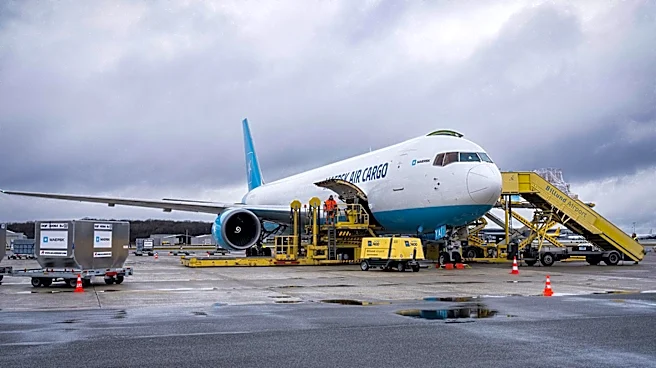











What's Happening?
A.P. Moeller Maersk, a Copenhagen-based integrated container logistics services provider, has announced the opening of a new fulfillment center in Hopedale, Massachusetts. This $100 million investment will expand Maersk's logistics operations in the Northeast
U.S. and is expected to create approximately 1,000 jobs. The 617,000 square-foot facility is designed to support a major e-commerce customer, although the company has not disclosed the client's identity. The center will be equipped with advanced conveyor and sortation technology, enabling it to process up to 330,000 units per day at peak capacity. This development is part of Maersk's strategy to enhance its integrated logistics services, which include transportation, warehousing, fulfillment, and distribution, to provide a seamless customer experience.
Why It's Important?
The establishment of this new fulfillment hub is significant for several reasons. It reflects the growing demand for modern logistics capabilities that can meet the increasing consumer expectations for faster and more reliable delivery services. By positioning inventory closer to customers, Maersk aims to enhance its ability to respond to demand with greater speed and flexibility. This move also underscores the importance of the Northeast U.S. as a strategic logistics hub, potentially boosting the local economy through job creation and increased business activity. Furthermore, the investment highlights the ongoing evolution of the logistics industry, where companies are increasingly leveraging technology to improve efficiency and service delivery.
What's Next?
As the facility is set to open in late August, Maersk will likely focus on finalizing the setup and ensuring that the technology and processes are in place to handle high-volume operations. The company may also continue to explore opportunities to expand its logistics network in other strategic locations. Additionally, the success of this facility could influence other logistics providers to invest in similar capabilities to remain competitive. Stakeholders, including local businesses and the workforce, will be closely watching the impact of this development on the regional economy and job market.