





What's Happening?
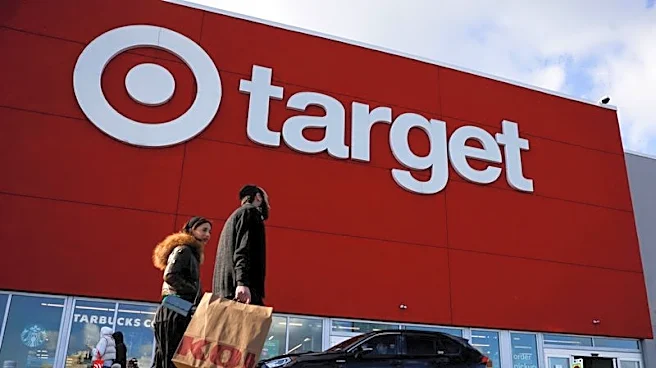
Target's second-quarter operating income significantly increased to $2.6 billion, a substantial rise from $1.3 billion in the same period last year. This surge was largely attributed to a $994 million pre-tax reimbursement from tariff refunds. The company
also reported a 3.8% growth in comparable sales and a 5.3% increase in net sales, reaching $26.5 billion. CEO Michael Fiddelke emphasized the company's focus on sustained growth, highlighting improvements in inventory management and a revitalized grocery business. Merchandise sales saw a 5% increase, while non-merchandise sales, which include Target's retail media network Roundel, the Target Circle 360 membership program, and Target Plus, grew by 20.1%. Digital comparable sales rose by 8.7%, driven by over 25% growth in same-day delivery services. Despite these gains, apparel and home businesses were noted as 'barely positive,' indicating areas needing further improvement.
Why It's Important?
This financial performance is important for the retail sector as it signals a potential turnaround for Target, a major U.S. retailer. The significant increase in operating income, even when excluding the tariff refund, suggests that strategic changes implemented by CEO Michael Fiddelke are beginning to yield positive results. The growth in comparable sales and net sales indicates that consumers are returning to Target's stores and online channels, which could influence other retailers to adopt similar strategies in merchandising, store layouts, and pricing. The emphasis on improving the grocery business and digital sales, particularly same-day delivery, reflects broader trends in consumer behavior and the competitive landscape of the retail industry. This positive outlook could also impact investor confidence in the retail market, especially as Target has raised its full-year net sales growth forecast.
What's Next?
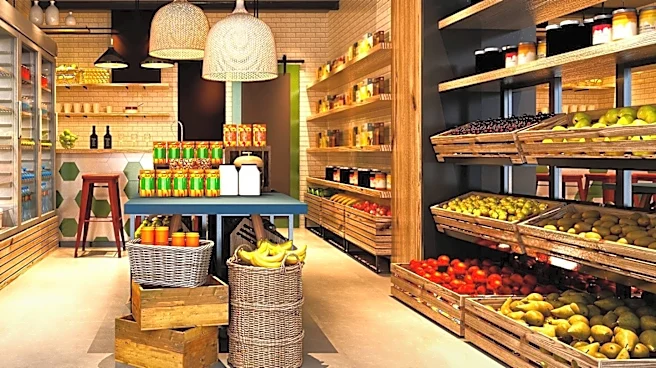
Target anticipates full-year net sales growth of approximately 5%, an increase from its previous guidance. The company also expects earnings per share to range from $9.90 to $10.90, including the second-quarter tariff impact. Excluding this impact, the range would be $8.25 to $9.25 per share, still an improvement over the prior outlook. Target plans to launch Target Beauty Studio in over 600 stores starting in September, filling a void left by a previous partnership. The company is also continuing with 100 full-store remodels, aiming for 130 this year, and has opened 24 new full-size stores. Additionally, Target has appointed designer Isaac Mizrahi as creative director and Chandhu Nair as its first chief AI officer to further growth and improve personalization. These initiatives suggest a continued focus on enhancing the customer experience, expanding offerings, and leveraging technology for operational efficiencies.
Beyond the Headlines
The substantial tariff refund received by Target highlights the complex and often unpredictable impact of international trade policies on corporate finances. While a one-time boost, it underscores how shifts in trade relations can significantly affect the profitability of large retailers. The company's strategic investments in AI, with the appointment of a chief AI officer and partnerships with OpenAI and Google Gemini, indicate a broader industry trend towards integrating advanced technology to enhance customer experience and operational efficiency. This move could set a precedent for how other major retailers approach digital transformation and agentic commerce. Furthermore, Target's efforts to revitalize its grocery business and focus on 'style, design, and value' reflect an evolving consumer demand for convenience, quality, and affordability, pushing retailers to innovate beyond traditional offerings to maintain market relevance and customer loyalty.