







What's Happening?
SkyWest Airlines has revised its 2026 earnings guidance downwards, primarily attributing this change to higher fuel expenses impacting its prorate segment. Despite this adjustment, the airline reported positive third-quarter 2026 results, with revenues
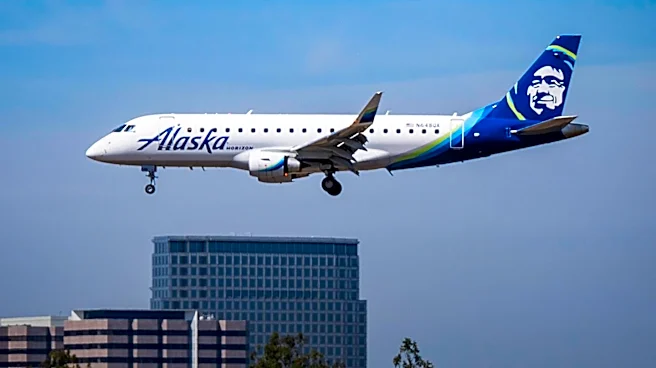
reaching US$1,117.36 million and net income at US$119.52 million. The company's earnings per share (EPS) remained above US$3. SkyWest continues its strategic investment in regional jets, with plans to expand its fleet to approximately 300 E175 aircraft by 2027. This fleet expansion and its long-term flying contracts are expected to support its earnings power, even as short-term fuel costs pressure the economics of its prorate flying operations. The airline's business model relies on long-term flying contracts with major partners like United Airlines, Delta Air Lines, American Airlines, and Alaska Airlines, which helps stabilize a significant portion of its revenue. However, the recent guidance cut highlights the vulnerability of its prorate segment to fluctuating fuel prices.
Why It's Important?
This revised guidance from SkyWest Airlines is significant for the regional airline sector and its investors, as it underscores the persistent challenge of fuel cost volatility. While SkyWest's core business, driven by long-term contracts and fleet upgrades, remains robust, the impact on its prorate segment demonstrates how external factors like fuel prices can quickly affect profitability. Investors are now weighing the stability provided by contracted regional flying and fleet modernization against the unpredictability of fuel expenses. The company's ability to absorb these shocks while continuing its E175 fleet expansion will be crucial for its long-term financial health. This situation also highlights the broader economic pressures on the airline industry, where operational costs, particularly fuel and maintenance, can cap potential earnings despite strong demand for block hours under partner contracts. The market's reaction to this guidance cut will likely influence investor sentiment towards other regional carriers facing similar operational challenges.
What's Next?
The immediate focus for SkyWest Airlines will be on managing fuel costs and assessing their continued impact on the prorate segment. Investors will closely monitor whether fuel prices stabilize or continue to erode the economics of prorate flying. The company's ongoing expansion of its E175 fleet is expected to continue, reinforcing its position in contracted regional flying. However, the risk remains that persistent fuel and maintenance pressures, or potential schedule changes from partner airlines, could further limit flying capacity and make the updated outlook a ceiling rather than a temporary reset. Analysts will likely revise their forecasts for SkyWest, which previously projected revenues of US$5.1 billion and earnings of US$528.7 million by 2029. The company's ability to maintain strong block hours under existing partner contracts will be a key short-term swing factor. Future earnings calls and financial reports will provide more clarity on how SkyWest plans to mitigate these cost pressures and maintain its growth trajectory.
Beyond the Headlines
Beyond the immediate financial implications, SkyWest's situation reflects a broader industry trend where regional airlines, despite their critical role in connecting smaller markets, operate with thin margins susceptible to external economic forces. The reliance on long-term contracts with major carriers provides a degree of stability but also ties their fortunes to the strategic decisions and operational needs of these larger partners. The ongoing investment in more fuel-efficient aircraft like the E175 is a strategic move to mitigate fuel price volatility in the long run, but the transition period still exposes the company to current market fluctuations. This scenario also brings into focus the delicate balance between fleet modernization, operational efficiency, and cost control in a highly competitive and capital-intensive industry. The ability of regional carriers to adapt to these challenges will determine their sustainability and their continued role in the U.S. aviation network.