





What's Happening?
An international network allegedly stole over $129 million from businesses worldwide by using advanced artificial intelligence to impersonate executives and lawyers. An indictment unsealed in federal court in Manhattan charges three men, including two Israelis,
Sharon Hazan, 54, and Guy Sheetrit, 42, who also resides in the United Arab Emirates. The third defendant is Jacob Soall, 41, from Spain and the United Kingdom. Prosecutors allege that the defendants targeted employees authorized to transfer large sums of company money, impersonating chief executives using AI-generated voices and, in some cases, faces. They would send messages through electronic signature platforms before arranging phone or video calls, directing employees to transfer millions into accounts controlled by the fraud network. Alleged victims include a Missouri hospital system that lost approximately $4.83 million, a Rhode Island bank that lost $2.68 million, and a California hospital system that lost nearly $3 million.
Why It's Important?
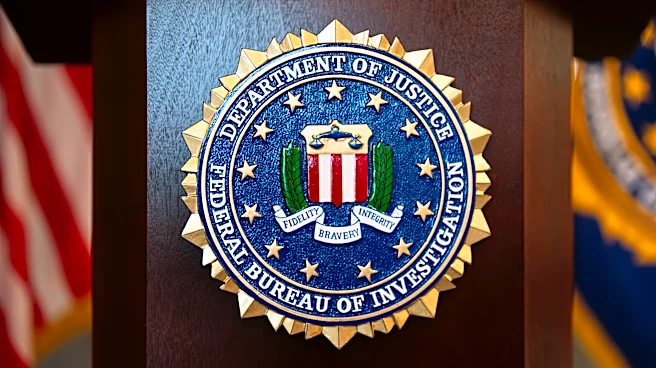
This case underscores the escalating threat of AI-powered fraud to U.S. businesses and financial institutions. The use of AI to generate convincing voices and faces for impersonation bypasses traditional security measures and exploits human trust, making it incredibly difficult for employees to detect. The FBI has highlighted this as an example of how emerging technology can be exploited for large-scale financial fraud, where employees willingly transfer funds believing they are following legitimate instructions. The significant financial losses incurred by various U.S. entities, including hospitals and banks, demonstrate the widespread vulnerability. This incident will likely prompt U.S. companies to re-evaluate their internal financial authorization procedures and invest in advanced fraud detection technologies and employee training to counter these sophisticated AI-driven attacks.
What's Next?
All three defendants were arrested in recent months, and U.S. authorities have submitted extradition requests, which are currently pending. Each defendant faces seven federal charges, including conspiracy to commit wire fraud, wire fraud, aggravated identity theft, and money laundering offenses, with several charges carrying maximum prison sentences of 20 years. Investigators are actively seeking to identify additional victims and have urged businesses that suspect they were targeted to contact the FBI. The outcome of the extradition proceedings and subsequent trials will set precedents for prosecuting international AI-driven financial crimes. This case will also likely accelerate the development of countermeasures and best practices for businesses to protect themselves against deepfake and AI voice impersonation scams.
Beyond the Headlines
The alleged use of AI to create 'fake CEOs' and 'fake lawyers' raises profound ethical and legal questions about the misuse of advanced technology. The case illustrates how convincingly fabricated digital identities can turn ordinary financial authorization procedures into a multi-million dollar vulnerability. The handwritten script found, titled 'Lawyer Call,' which instructed impostors on how to prevent suspicion, reveals the meticulous planning and psychological manipulation involved. This incident highlights the urgent need for robust digital identity verification systems and increased awareness among employees about the potential for AI-generated deception. It also points to a future where distinguishing between real and AI-generated communication will become increasingly challenging, necessitating a societal shift in how we verify information and trust digital interactions.