






What's Happening?
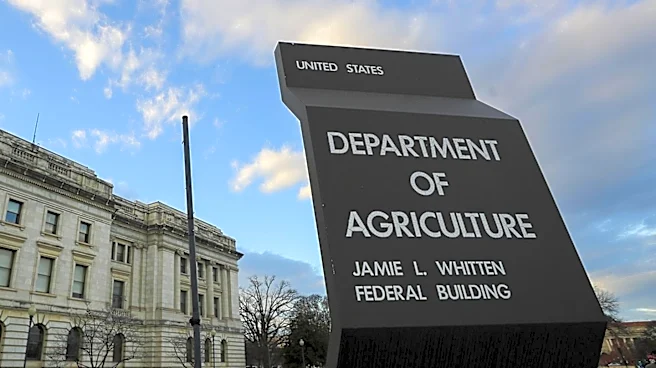
The U.S. Department of Agriculture (USDA) has released its latest World Agricultural Supply and Demand Estimates (WASDE) report, which has positively impacted the futures of soybean and corn. The report forecasts the highest soybean prices since the 2023/24
marketing year, providing a boost to these agricultural commodities. The WASDE report is a critical monthly publication that outlines global and U.S. supply, demand, and pricing for major agricultural commodities, serving as a benchmark for agribusinesses, farmers, and traders. The report's adjustments to the old and new crop balance sheets were favorable, with ending stocks coming in slightly below pre-report expectations, according to Scott Stiles, an extension economics program associate at the University of Arkansas Division of Agriculture.
Why It's Important?
The USDA's report is significant as it influences market expectations and trading strategies for agricultural commodities. The increase in soybean and corn futures can have widespread implications for farmers, agribusinesses, and the broader agricultural economy. Higher futures prices may lead to increased revenue for farmers, potentially encouraging more planting and investment in these crops. Additionally, the report's findings can affect global trade dynamics, as the U.S. is a major exporter of these commodities. The adjustments in the report also reflect broader market conditions and can influence pricing strategies and supply chain decisions across the agricultural sector.
What's Next?
Following the USDA report, stakeholders in the agricultural sector will likely adjust their strategies to align with the new market conditions. Farmers may consider altering their planting decisions based on the favorable price outlook for soybeans and corn. Traders and agribusinesses will also reassess their positions and contracts to capitalize on the updated forecasts. Additionally, international buyers may respond to the price changes by adjusting their import strategies. The USDA will continue to monitor and report on agricultural supply and demand, providing further updates that could influence future market trends.