







What's Happening?
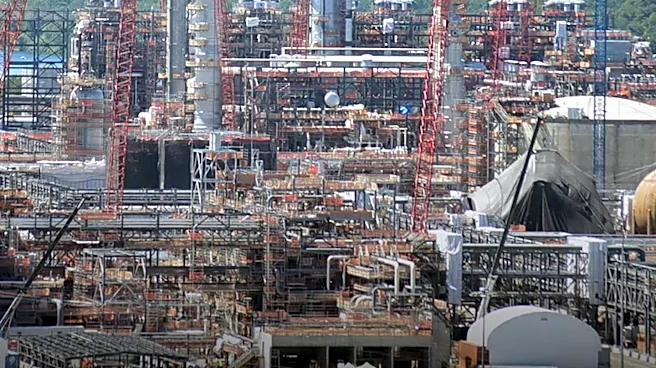
TRISO-X, a subsidiary of X-Energy, Inc., has announced the completion of vertical construction at its TX-1 advanced nuclear fuel fabrication facility in Oak Ridge, Tennessee. This milestone signifies the completion of the primary building structure of the 214,000-square-foot
facility. The project will now move into its next phase, which includes interior buildout, installation of fuel fabrication equipment, and continued construction of supporting facilities. Joel Duling, President of TRISO-X, stated that this progress brings the company closer to establishing a new domestic source of advanced nuclear fuel and supporting the deployment of next-generation American nuclear reactors. Clark Construction Group is the contractor for the project. The U.S. Nuclear Regulatory Commission (NRC) previously granted TRISO-X a 40-year Special Nuclear Material License for the facility, marking the first-ever NRC Category 2 fuel fabrication license issued for processing high-assay low-enriched uranium. TX-1 is expected to be the first new commercial-scale advanced U.S. nuclear fuel fabrication facility built in over 50 years.
Why It's Important?
The completion of vertical construction at the TX-1 facility is a significant step towards bolstering the domestic supply chain for advanced nuclear fuel in the United States. This facility is projected to produce approximately 700,000 TRISO-X fuel pebbles annually, equivalent to 5 metric tons of uranium, which is enough to fuel up to 11 Xe-100 reactors. This development is crucial for the energy independence and security of the U.S., reducing reliance on foreign sources for critical nuclear materials. The establishment of TX-1 supports the deployment of advanced small modular reactors (SMRs), such as X-energy’s Xe-100, which are designed to provide clean, safe, and reliable energy. This initiative also creates jobs and stimulates economic growth in the Oak Ridge area, with TRISO-X having expanded its nuclear fuel campus and received economic development support from the State of Tennessee. The project aligns with broader U.S. efforts to advance nuclear technology for grid, industrial, and artificial intelligence applications.
What's Next?
With vertical construction complete, the TX-1 facility will now proceed with the interior buildout, installation of manufacturing equipment, and construction of key support capabilities, including an adjacent graphite matrix powder building. The focus will shift to integrating the systems, equipment, and infrastructure necessary for commercial operations. TX-1 is being developed to support X-energy’s proposed deployment of its Xe-100 advanced SMR at Dow Inc.’s UCC Seadrift Operations manufacturing site in Texas, as part of the U.S. Department of Energy’s Advanced Reactor Demonstration Program. X-energy is also pursuing additional Xe-100 projects with partners like Energy Northwest, Amazon, and Centrica. The company will continue its cooperative research and development relationship with Oak Ridge National Laboratory and further expand its nuclear fuel campus. The ultimate goal is to bring TX-1 to full commercial operation, providing a stable domestic supply of advanced nuclear fuel for the next generation of American nuclear reactors.
Beyond the Headlines
The development of the TX-1 facility represents a broader strategic shift in U.S. energy policy, emphasizing advanced nuclear technology as a cornerstone for future energy security and climate goals. The facility's ability to produce high-assay low-enriched uranium fuel addresses a critical gap in the domestic nuclear fuel cycle, which has historically relied on foreign enrichment services. This move not only enhances national security by securing a domestic fuel supply but also positions the U.S. as a leader in advanced nuclear innovation. The project's success could catalyze further investment in advanced reactor technologies, potentially leading to a resurgence of nuclear power as a clean energy solution. Furthermore, the collaboration between private industry (TRISO-X, X-energy), government agencies (U.S. Department of Energy, NRC), and research institutions (Oak Ridge National Laboratory) exemplifies a comprehensive approach to tackling complex energy challenges and fostering technological advancement.