







What's Happening?
Lexicon, a Little Rock-based steel fabricator, celebrated the graduation of 98 employees from its skilled trades training program, Lexicon University. This marks the largest graduating class since the program's inception in 2022, bringing the total number
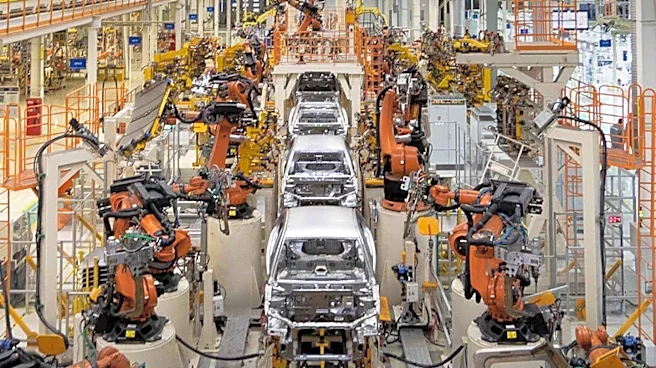
of graduates to over 100. The program provides training in industrial maintenance, structural fitting, and welding. Lexicon CEO Patrick Schueck emphasized the importance of workforce training, noting the increasing demand for skilled workers in construction and manufacturing due to the retirement of experienced tradespeople. Schueck stated, “We’ve got to figure out a way to replenish the talent that’s helped build America.” While Lexicon utilizes robotics in its operations, Schueck clarified that automation has led to increased production, necessitating more employees rather than replacing them. Catherine Brumbaugh, Director of Lexicon Training and Development, highlighted the program's goal to attract individuals to skilled trades and foster long-term careers within the company. Hands-on training is partly facilitated through a partnership with Arkansas Northeastern College.
Why It's Important?
This graduation event underscores a critical trend in the U.S. labor market: the growing demand for skilled trades and the challenge of replacing an aging workforce. The retirement of experienced tradespeople across construction and manufacturing sectors creates a significant skills gap that programs like Lexicon University are designed to address. By investing in internal training, companies like Lexicon are not only securing their future workforce but also providing valuable career opportunities for their employees. The integration of robotics and automation, often perceived as job threats, is shown here to actually increase the need for skilled labor due to enhanced production capabilities. This highlights a nuanced relationship between technology and employment, where advanced tools require a more highly trained workforce to operate and maintain them. The partnership with educational institutions like Arkansas Northeastern College further strengthens the program, ensuring that training is both industry-relevant and academically sound, thereby benefiting both the company and the broader economy by producing certified professionals.
What's Next?
Lexicon University will continue its training programs, with an ongoing focus on industrial maintenance, structural fitting, and welding, to meet the sustained demand for skilled workers. The company's commitment to internal workforce development suggests that future classes will be offered, potentially expanding in scope or size given the success of the latest cohort. The partnership with Arkansas Northeastern College is likely to continue, providing a blend of theoretical knowledge and practical, hands-on experience. Other companies in the construction and manufacturing sectors may look to Lexicon's model as a successful strategy for addressing their own workforce shortages. The emphasis on attracting new individuals to skilled trades indicates a long-term vision for replenishing the talent pool, which could involve increased outreach and recruitment efforts. The ongoing evolution of technology, particularly robotics, will also shape future training, ensuring that employees are equipped with the skills needed to work alongside advanced automation.
Beyond the Headlines
The success of Lexicon University reflects a broader societal shift towards recognizing the value and necessity of vocational training. For decades, there has been a strong emphasis on four-year college degrees, often at the expense of promoting skilled trades. However, the economic realities of workforce shortages and the high demand for specialized skills are bringing vocational education back into prominence. This program not only provides technical skills but also fosters a sense of loyalty and career progression within the company, contributing to employee retention and job satisfaction. The narrative that automation replaces jobs is challenged by Lexicon's experience, demonstrating that technology can instead create new, more complex roles that require advanced human skills. This highlights the importance of continuous learning and adaptation in a rapidly changing industrial landscape, where workers must evolve alongside technological advancements to remain competitive and valuable.