




What's Happening?
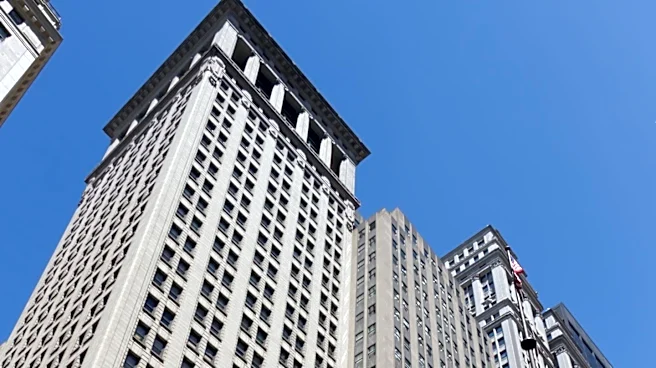
Two co-op units are currently on the market in The Whitby, a historic building in Manhattan's Hell's Kitchen neighborhood. This Emery Roth-designed structure, built in 1923, was originally a hotel and became known as a welcoming haven for actors, artists,
and musicians. Notable past residents include Al Capone in the early 1920s and Marilyn Monroe in the 1950s, during her relationship with Joe DiMaggio. The building retains many of its original historic details across its 217 units and offers amenities such as a full-service doorman and a rooftop deck with city views. One unit, a one-bedroom, is listed for $535,000, while a two-bedroom unit is available for $895,000. Both have undergone modernizations while preserving pre-war architectural elements. Douglas Bellitto, co-listing the property with Rachel Glazer of Brown Harris Stevens, highlights the building's unique history and its continued appeal to creatives.
Why It's Important?
The sale of these units in The Whitby underscores the enduring value and appeal of historic properties in prime New York City locations. The building's rich past, associated with iconic figures like Al Capone and Marilyn Monroe, adds significant cultural and historical importance, potentially attracting buyers interested in unique residences with storied backgrounds. For the real estate market, such listings can command premium prices due to their historical significance and architectural integrity, even after extensive renovations. The presence of a full-service co-op with amenities like a rooftop deck also reflects a demand for luxury living combined with historical charm in Manhattan. This trend highlights how historical preservation, when coupled with modern updates, can create highly desirable and valuable urban living spaces, influencing pricing and buyer interest in the competitive NYC market.
What's Next?
The co-op units in The Whitby are expected to attract a diverse range of buyers, potentially including those in the entertainment industry, given the building's historical connection to creatives. The listing agent, Douglas Bellitto, envisions the next buyer for the one-bedroom unit to be someone in the entertainment sector, drawn to the building's welcoming community. The ongoing interest in properties with unique historical narratives suggests that these units will likely find buyers who appreciate both the modern comforts and the preserved pre-war details. The successful sale of these units could further solidify The Whitby's reputation as a 'hidden jewel' in Midtown West, potentially influencing future property valuations in the area and encouraging similar preservation and modernization efforts in other historic New York City buildings.
Beyond the Headlines
Beyond the immediate real estate transaction, the continued allure of The Whitby speaks to a broader cultural fascination with the lives of historical figures and the spaces they inhabited. The building's transformation from a hotel to individual residences, while maintaining its historical essence, reflects a common challenge and opportunity in urban development: how to adapt old structures for modern living without losing their unique character. The rumored haunting by Al Capone's ghost adds a layer of mystique, contributing to the building's narrative and potentially enhancing its appeal to certain buyers. This blend of history, celebrity association, and architectural preservation creates a unique market niche, demonstrating that the 'story' of a property can be as valuable as its physical attributes, fostering a sense of connection to New York City's vibrant past.