



What's Happening?
Tesla's stock experienced a decline of over 4% following the release of its second-quarter earnings report, which revealed a significant profit miss despite record vehicle deliveries. The company reported $28.24 billion in revenue, surpassing analysts'
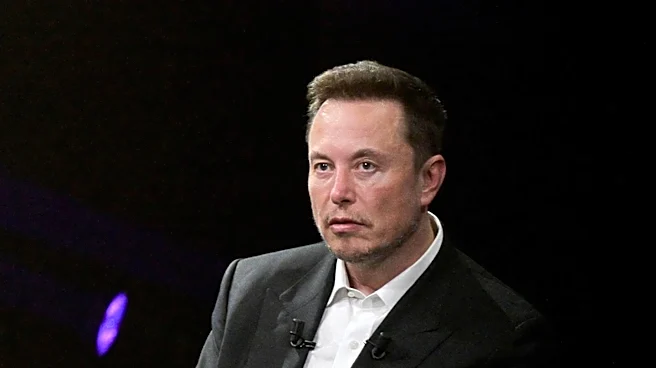
expectations of $26.31 billion. However, the adjusted earnings per share (EPS) fell short at 33 cents compared to the anticipated 50 cents. This discrepancy in profit margins has raised concerns among investors, contributing to the stock's decline. Tesla's CEO, Elon Musk, highlighted the company's ongoing investments in AI and manufacturing, including the development of the Optimus humanoid robot and the expansion of its robotaxi services. Despite these advancements, the company's gross margin and capital expenditures also fell short of expectations, further impacting investor confidence.
Why It's Important?
The earnings report is significant as it highlights the challenges Tesla faces in maintaining profitability while pursuing ambitious technological advancements. The profit miss, despite strong revenue, underscores the pressure on Tesla to balance growth with financial performance. This development could influence investor sentiment and impact Tesla's stock performance in the short term. Additionally, the focus on AI and robotics indicates Tesla's strategic shift towards diversifying its product offerings beyond traditional automotive sales. This pivot could have long-term implications for the company's market position and competitive landscape, particularly as it seeks to integrate AI technologies into its operations.
What's Next?
Looking ahead, Tesla plans to continue its investment in AI and manufacturing, with a focus on the production of the Optimus robot and the expansion of its robotaxi services. The company aims to manage these developments carefully to avoid potential setbacks that could harm its reputation. Investors and analysts will likely monitor Tesla's ability to execute these initiatives while maintaining financial stability. The company's approach to capital expenditures and its ability to address supply chain constraints will be critical factors in its future performance. Stakeholders will also be watching for any updates on potential synergies between Tesla and SpaceX, as well as the impact of these investments on Tesla's overall business strategy.