




What's Happening?
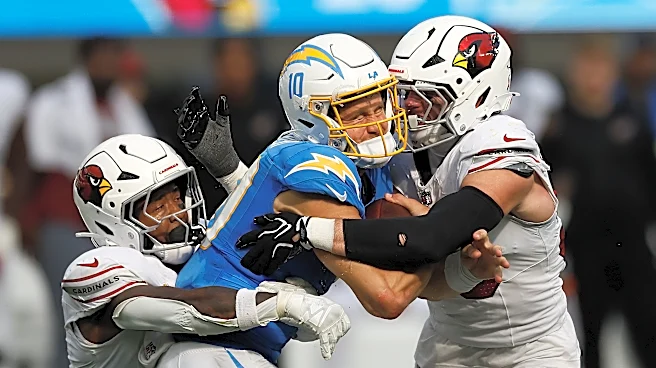
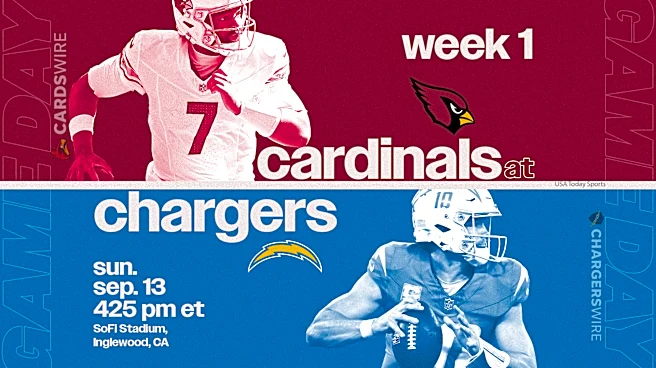
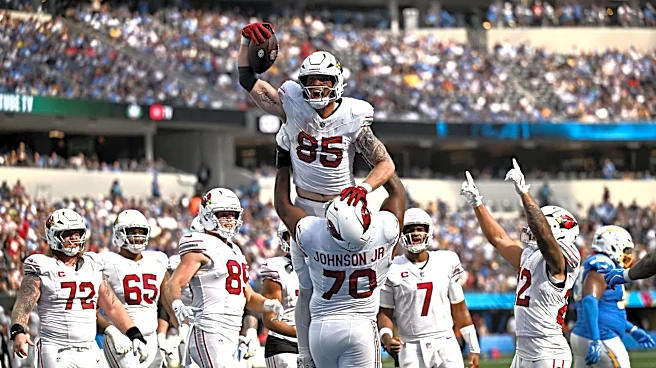
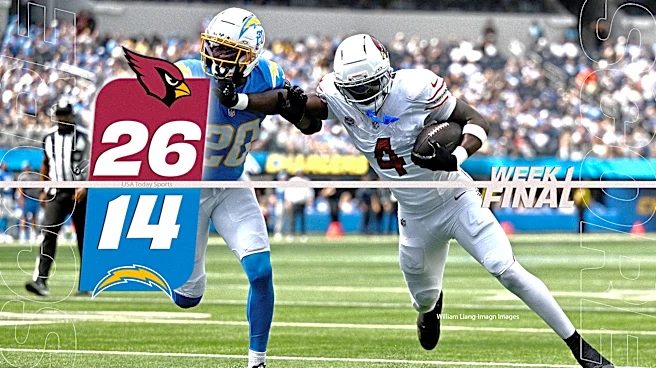
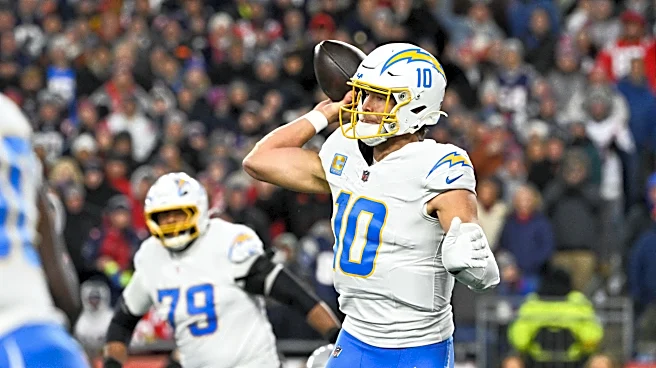
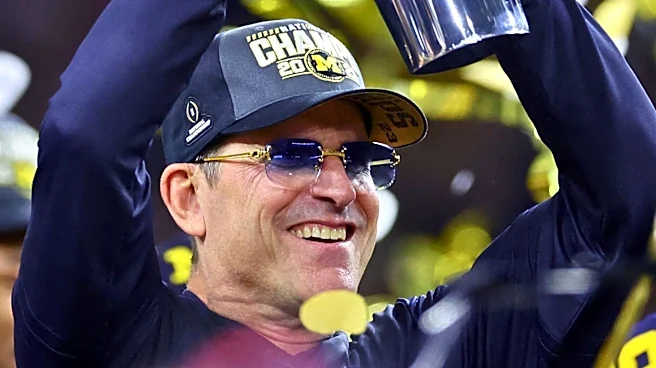
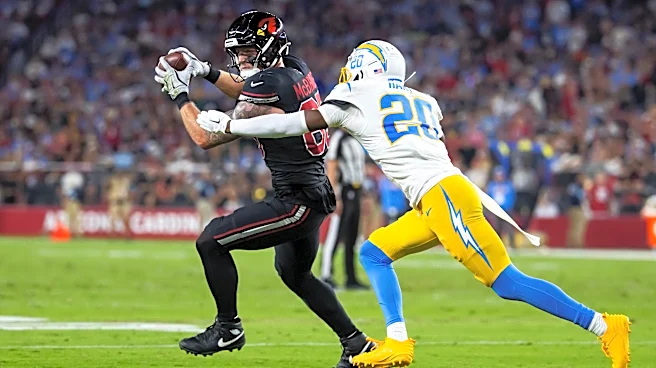
Los Angeles Chargers head coach Jim Harbaugh has voiced regret regarding his team's preseason approach after their 26-14 home loss to the Arizona Cardinals in Week 1. Harbaugh admitted that the team made "preseason type of mistakes" and, in retrospect,
wished he had played his starters more during the preseason to provide them with additional game repetitions. While the Chargers' starters did participate in preseason games, their playing time was limited to approximately one drive per game. This strategy, intended to minimize injury risk, is now being re-evaluated by Harbaugh in light of the team's flat performance in the season opener. The Chargers' core roster remains largely consistent with the previous season, leading to questions about the team's readiness despite the limited preseason exposure for key players.
Why It's Important?
This statement from Jim Harbaugh highlights a recurring debate in professional sports, particularly in the NFL, regarding the optimal balance between player safety and game readiness during the preseason. Coaches often face a dilemma: risk injury to star players in exhibition games or prioritize their health, potentially at the cost of team cohesion and sharpness for the regular season. Harbaugh's regret underscores the critical importance of game-speed repetitions for players to shake off rust and execute effectively. For the Chargers, a team with high expectations, a slow start could have significant implications for their playoff aspirations in a competitive league. This situation also provides a talking point for those who advocate for more extensive preseason play, suggesting that the benefits of game reps outweigh the perceived risks, especially for teams integrating new systems or coaching philosophies.
What's Next?
Following Harbaugh's comments, it is likely that the Chargers' coaching staff will review their preseason methodology for future seasons, potentially adjusting the playing time for starters. The team will need to quickly address the "preseason type of mistakes" identified by Harbaugh to avoid further setbacks in the early part of the regular season. Other NFL teams and coaches may also take note of Harbaugh's reflection, potentially influencing their own preseason strategies. The Chargers' performance in upcoming games will be closely scrutinized to see if the Week 1 loss was an anomaly or indicative of deeper issues stemming from their preparation. The incident could also fuel further discussion among league officials and player associations about the structure and value of the NFL preseason.
Beyond the Headlines
Harbaugh's candid admission touches upon the broader philosophical tension between short-term risk aversion and long-term performance optimization in elite sports. The trend in recent years has been to reduce the exposure of key players in preseason games, driven by concerns over injuries that could derail a season. However, this approach can lead to a lack of game conditioning and timing, which are crucial for peak performance. This situation also reflects the immense pressure on NFL coaches to deliver immediate results, where even a single early-season loss can trigger significant introspection and criticism. The balance between preserving player health and ensuring competitive readiness is a complex challenge that will continue to evolve as sports science and coaching philosophies advance.