







What's Happening?
The International Orienteering Federation (IOF) has announced two new Gold World Ranking Event (WRE) races in China, scheduled for autumn. These events aim to draw top international orienteering athletes to Asia. The Taizhou Gold WRE in Zhejiang Province
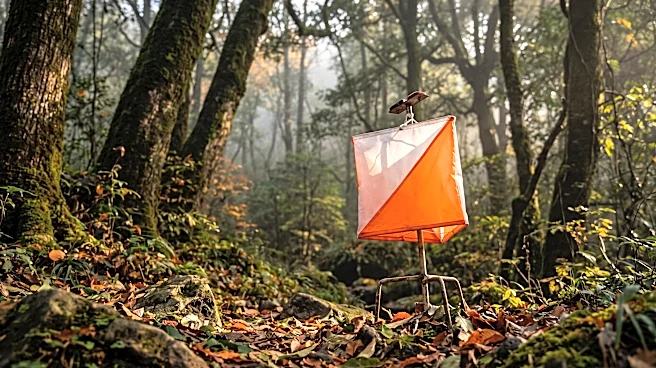
will kick off the series on October 24–25, followed by the Leshan Gold WRE in Sichuan Province, featuring three races from October 29–31. The proposed program includes three sprints, a middle distance, and a sprint relay. These races are designed to extend the international season and attract a strong international field by offering prize money, additional support, and incentives for participating athletes. The IOF has signed an agreement with the Chinese Radio Sports and Orienteering Association (CRSOA), which has selected regional associations in Sichuan and Zhejiang to host the events. This initiative is part of a broader effort to increase high-profile international orienteering events outside Europe, with a specific focus on China, building on the sport's growing development in the country and its return to Sichuan following the Chengdu 2025 World Games.
Why It's Important?
This development signifies a strategic expansion of international orienteering beyond its traditional European stronghold, aiming to globalize the sport and tap into new markets, particularly in Asia. For the U.S. and other non-European nations, these events offer a unique opportunity for their athletes to compete against a high-level international field in a new environment, potentially fostering greater diversity in competitive experience and skill development. The prize money and incentives could attract U.S. athletes, providing them with financial benefits and exposure. Furthermore, the increased visibility of orienteering in China could inspire greater participation and investment in the sport globally, including in the U.S., as the sport gains a larger international footprint. The collaboration between the IOF and CRSOA also highlights a growing trend of international sports federations partnering with Asian countries to host major events, reflecting the region's increasing influence in global sports.
What's Next?
The upcoming Gold WRE events in Taizhou and Leshan in October will serve as a crucial test for the IOF's strategy to expand international orienteering in Asia. The success of these events, particularly in attracting a strong international field and ensuring smooth operations, will likely influence future decisions regarding the allocation of high-profile orienteering competitions. Participating athletes will be preparing for these races, which offer valuable world ranking points and prize money. The Chinese Radio Sports and Orienteering Association, along with the regional associations in Sichuan and Zhejiang, will be focused on logistics, event management, and ensuring a high-quality competitive experience. Huichang will provide timing and punching services, aiming to meet international competition standards. The long-term goal is to establish China as a key destination on the international orienteering calendar, potentially leading to more events and increased engagement from the global orienteering community.
Beyond the Headlines
The expansion of international orienteering into China carries deeper implications beyond immediate athletic competition. It represents a cultural exchange, introducing a niche European sport to a vast new audience and potentially integrating Chinese athletic traditions and landscapes into the global orienteering narrative. This move could also foster greater international cooperation in sports development, with expertise and resources being shared between the IOF and Chinese sports organizations. The focus on increasing high-profile events outside Europe challenges the traditional geographic concentration of the sport, promoting a more inclusive and diverse global sporting landscape. Moreover, the emphasis on environmental settings for orienteering events could subtly promote ecological awareness and appreciation for natural landscapes in host regions, aligning sports with broader environmental goals. The success of these events could serve as a model for other niche sports looking to expand their global reach.