






What's Happening?
Mortgage rates in the U.S. experienced a slight decrease this week, offering some relief to prospective homebuyers just before the Thanksgiving holiday. According to Freddie Mac, the average rate for a 30-year fixed home loan dropped to 7.21% for the week ending
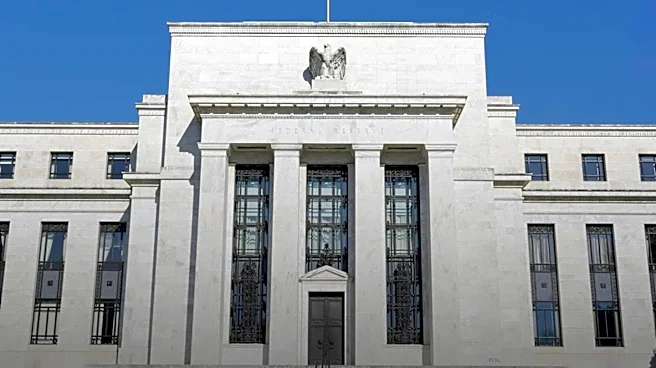
November 25, a 7-basis-point reduction from the previous week's 7.28%. This dip is attributed to volatility in financial markets, partly driven by AI investment trends, and a temporary fall in Treasury yields below 5%. However, this relief may be short-lived, as the Federal Reserve is widely expected to raise its benchmark rate at the upcoming Federal Open Market Committee meeting on December 8, with markets pricing in a 97.6% chance of a 25-basis-point increase.
Why It's Important?
The current market conditions present a mixed bag for U.S. homebuyers. While the slight dip in mortgage rates offers a brief window of opportunity, the overarching trend of rising rates and the looming Fed hike continue to constrain affordability. This environment has already led to significant declines in pending home sales and existing-home sales, which hit their lowest levels since 2010 in October. For active buyers, however, there are some advantages, including reduced competition, an 8.6% year-over-year increase in inventory, and a greater willingness from sellers to negotiate prices. The median listing price has also fallen by 2.4% from a year ago to $400,000, according to Realtor.com. The long-term impact of AI investment on consumer housing behavior, particularly in tech hubs, is also emerging, with buyers opting for higher down payments.
What's Next?
The housing market is bracing for the Federal Reserve's anticipated rate hike in December, which is expected to push mortgage rates upward again. This will likely intensify affordability challenges, as noted by Realtor.com senior economist Anthony Smith, who states that affordability will remain the dominant constraint until inflation cools sufficiently to allow for a sustained downward trend in mortgage rates. Buyers will need to closely monitor Fed decisions and market responses. The influence of AI-generated wealth on housing behavior, particularly in tech-centric areas, suggests a growing divergence in market dynamics. The ability of the market to absorb these changes while maintaining some level of accessibility for a broad range of buyers will be a key challenge.
Beyond the Headlines
The interplay between AI investment, financial market volatility, and mortgage rates highlights the increasing complexity of economic factors influencing the U.S. housing market. The emergence of AI-generated wealth impacting consumer housing behavior, such as higher down payments in tech hubs, suggests a potential widening of the wealth gap in real estate. This could further exacerbate housing affordability issues for those not benefiting from the tech boom. The market's reliance on credit scores for mortgage qualification also underscores existing financial inequalities, as higher scores lead to better rates, effectively penalizing those with lower scores. This situation calls for a deeper examination of how technological advancements and financial policies can either mitigate or worsen housing accessibility for different socioeconomic groups.