






What's Happening?
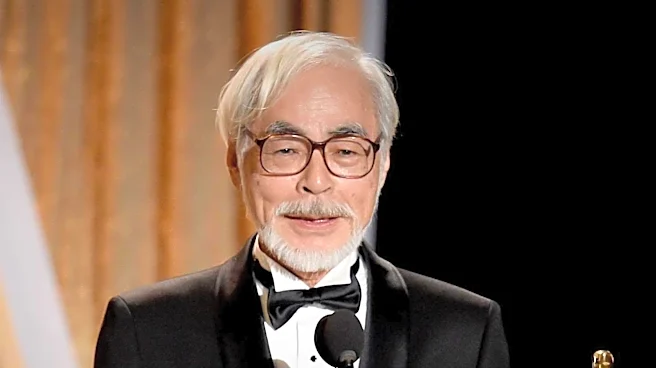
Hayao Miyazaki, born in Tokyo in 1941, is a renowned Japanese animation director, screenwriter, and illustrator. He co-founded Studio Ghibli with Isao Takahata, and through his work, has become one of the most recognized animation directors globally.
His films, including 'My Neighbor Totoro,' 'Princess Mononoke,' 'Spirited Away,' and 'Howl's Moving Castle,' are known for appealing to audiences of all ages, despite often appearing to be made for children. Miyazaki's signature style incorporates flying machines, forest spirits, brave young female protagonists, and narratives where evil is not easily discernible. His Academy Award win for 'Spirited Away' marked a pivotal moment in the global recognition of Japanese animation as an art form. Miyazaki's career began in 1963 at Toei Animation, and he directed his first feature film in 1979. The success of his manga 'Nausicaä of the Valley of the Wind,' which he adapted into a film in 1984, led to the establishment of Studio Ghibli in 1985 with Takahata and producer Toshio Suzuki. Despite multiple announcements of retirement, Miyazaki has consistently returned to direct new films, earning an honorary Academy Award in 2014 and his second Best Animated Feature Oscar in 2024 for 'The Boy and the Heron.'
Why It's Important?
Hayao Miyazaki's contributions have significantly shaped the landscape of global animation and cultural exchange. His films transcend typical animated fare, offering complex narratives and themes that resonate with diverse audiences, thereby elevating the perception of animation as a serious art form. The international acclaim, particularly his Academy Awards, has brought Japanese animation to a wider global stage, influencing filmmakers and artists worldwide. Studio Ghibli, under his co-founding and creative direction, has become a cultural institution, known for its distinctive artistic style and storytelling. Miyazaki's recurring themes, such as the celebration of flight, the intricate relationship between nature and humanity, the portrayal of strong female characters, and a consistent anti-war stance, provide profound social and philosophical commentary. These themes encourage critical thinking about environmentalism, gender roles, and conflict, making his work not just entertainment but also a medium for cultural and ethical reflection. The establishment of the Ghibli Museum and Ghibli Park further solidifies his legacy, creating physical spaces where fans can immerse themselves in the worlds he created, fostering a deeper appreciation for his art and Japanese culture.
What's Next?
While Hayao Miyazaki has announced retirement multiple times, his recent Oscar win for 'The Boy and the Heron' suggests his creative output may not be entirely concluded. Future projects, if any, would likely continue to explore his characteristic themes and artistic vision, potentially further pushing the boundaries of animated storytelling. The ongoing operation and popularity of the Ghibli Museum in Tokyo and Ghibli Park in Aichi indicate a sustained interest in his work and the Studio Ghibli universe. These attractions will continue to serve as cultural landmarks, drawing visitors and preserving his legacy for future generations. The influence of Miyazaki's work is also expected to persist in the animation industry, inspiring new generations of animators and filmmakers globally. His thematic depth and artistic integrity will likely remain a benchmark for quality and meaningful storytelling in animation, ensuring his impact extends far beyond his active directing career.
Beyond the Headlines
Beyond the immediate success and critical acclaim, Hayao Miyazaki's work delves into deeper ethical and cultural dimensions. His consistent portrayal of 'grey characters'—individuals who are neither purely good nor evil, like Lady Eboshi in 'Princess Mononoke' or Yubaba in 'Spirited Away'—challenges simplistic moral binaries and encourages a more nuanced understanding of human nature and conflict. This approach fosters empathy and critical thinking, moving beyond conventional hero-villain narratives. Furthermore, the emphasis on everyday life and food in his films, such as a shared meal or a bowl of noodles, serves as a powerful symbol of warmth, belonging, and the simple joys of existence, grounding his fantastical worlds in relatable human experiences. This subtle yet profound aspect of his storytelling highlights the importance of connection and community. Miyazaki's films also subtly critique industrialization and its impact on nature, reflecting broader societal concerns about environmental degradation and the balance between progress and preservation. These underlying messages contribute to a rich cultural tapestry that resonates deeply with audiences, offering not just escapism but also profound insights into the human condition and our relationship with the world.