







What's Happening?
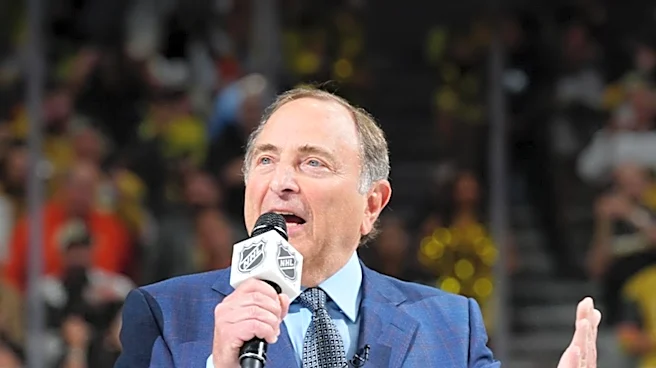
NHL Commissioner Gary Bettman anticipates the league will achieve a new revenue record of $8 billion in the 2026-27 season, following a $7.4 billion revenue generation in the 2025-26 season. This projection comes as the league experiences strong ticket
sales and high ratings in the United States. Bettman highlighted the success of the previous season, noting record revenues and attendance, along with over 80 national sponsors. The league is also adapting to changes in local media, with six teams' telecasts now produced by the league and streaming on Prime Video. Discussions are underway regarding the renewal of U.S. national rights, which expire after the upcoming season, with ESPN/Disney and Warner Bros. Discovery/Turner holding exclusive negotiating periods starting January 1.
Why It's Important?
The projected record revenue for the NHL signifies robust financial health and growing popularity for the sport in the U.S. This financial strength allows for continued investment in the league, potentially enhancing player development, fan engagement, and overall market reach. The evolving local media landscape, with the league taking on production and streaming through platforms like Prime Video, indicates a strategic shift towards direct-to-consumer models, which could impact traditional broadcast partners and local sports networks. The ongoing negotiations for national media rights are crucial, as these deals often dictate the financial stability and exposure of major sports leagues, influencing advertising revenue, team valuations, and the overall economic ecosystem surrounding professional hockey.
What's Next?
The NHL will continue discussions with ESPN/Disney and Warner Bros. Discovery/Turner regarding national media rights, with exclusive negotiating periods commencing on January 1. The league is also monitoring the impact of no-trade clauses in player contracts to determine if adjustments are needed in future collective bargaining agreements. Furthermore, the NHL is exploring potential expansion, with unsolicited expressions of interest, particularly from the Friedkins regarding Texas expansion, and competing efforts in Atlanta. Any expansion would require a decision from the board of governors, considering factors like price and competitive issues. The league also plans to continue its international focus, particularly in Germany, with games scheduled for the current and next seasons.
Beyond the Headlines
The NHL's strategic moves in media rights and potential expansion reflect broader trends in the sports industry, where leagues are increasingly seeking to maximize revenue through diversified distribution channels and market penetration. The shift towards league-produced content and streaming partnerships could set a precedent for other sports, altering the traditional relationship between leagues, broadcasters, and fans. The debate over no-trade clauses highlights the ongoing tension between player autonomy and team management, a dynamic that frequently shapes collective bargaining in professional sports. The emphasis on international growth, particularly in Germany, underscores the global ambitions of U.S. sports leagues, aiming to tap into new fan bases and revenue streams beyond North America.