








What's Happening?
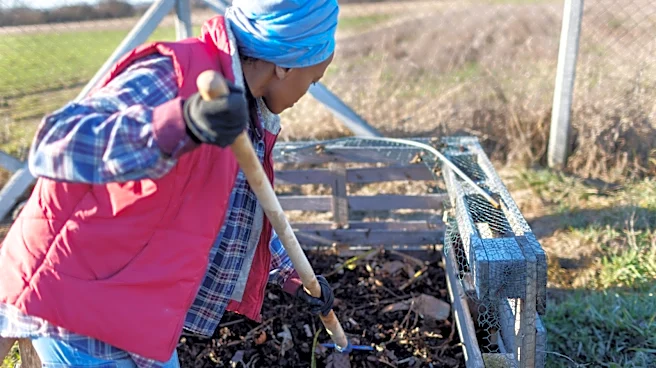
Laura Ney, an agriculture and natural resources agent, provides insights into effective composting practices to reduce food waste and methane emissions. Composting involves converting organic materials like fruit and vegetable scraps into soil, preventing
them from decomposing in landfills where they produce methane, a potent greenhouse gas. Ney emphasizes the importance of maintaining a balanced compost pile, avoiding materials like meat and oils that can cause unpleasant odors. The Environmental Protection Agency (EPA) offers guidelines for successful composting, such as choosing a well-drained, shaded spot and layering materials to ensure proper aeration and moisture levels.
Why It's Important?
Composting is a practical solution to mitigate environmental impacts by reducing the amount of organic waste in landfills, thereby decreasing methane emissions. Methane is a significant contributor to climate change, and managing it effectively can have substantial environmental benefits. By adopting composting practices, individuals can contribute to sustainability efforts, reduce waste management costs, and promote healthier ecosystems. This initiative aligns with broader environmental goals and encourages community involvement in sustainable practices.