





What's Happening?
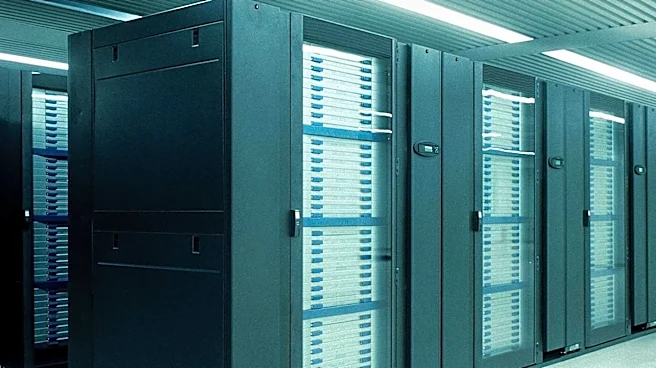
The United States is experiencing a significant boom in data center construction, driven largely by substantial capital investments and the expansion of artificial intelligence (AI). Alli Finn, director of community partnerships at AI Now Institute, highlighted
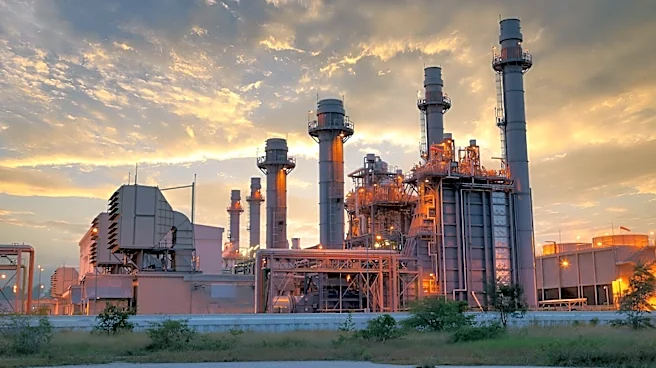
in a Clean Energy Group webinar that the U.S. accounts for 54% of the world's hyperscale capacity as of 2025, a figure that continues to grow. While data centers have existed for decades, their current scale and rapid build-out are unprecedented. This growth, however, comes with potential negative impacts on communities and local budgets. Finn noted that data centers are among the most subsidized industries in the U.S., costing states billions annually through tax breaks and corporate giveaways. Additionally, the energy demands of these centers, often met by fossil fuels, contribute to air pollution and increased electricity consumption, with projections indicating data centers could use 12% of the country's electricity by 2030.
Why It's Important?
The rapid expansion of data centers has significant implications for local and state governments, economies, and the environment. The substantial tax breaks offered to attract these facilities can strain local budgets, making communities dependent on an industry that often provides limited local employment once operational. The massive energy consumption of data centers, predominantly from fossil fuels, exacerbates climate concerns and can lead to increased electricity prices and grid instability for residents. This boom is not merely a technological advancement but a complex issue with economic, environmental, and social dimensions. Policymakers face the challenge of balancing economic development with community well-being and environmental sustainability, especially as the federal government emphasizes that AI investment should not be slowed by regulation, despite growing local concerns.
What's Next?
Policymakers are urged to implement structures that ensure transparency and define data centers within zoning codes to mitigate negative impacts. Recommendations include requiring 24/7 renewable energy sources, prohibiting backup diesel generators, or at least mandating strict permit controls and pollution equipment. States are also considering taxing electricity use without exemption and increasing rates during energy emergencies. Examples like Ohio's proposed SB2 and Oregon's HB 3546 aim to protect ratepayers and ensure large industrial users pay higher rates. The AI Now Institute provides a policy toolkit to help local and state policymakers manage or restrict data center development. The ongoing debate will likely involve balancing federal encouragement for AI development with local and state efforts to address the environmental and economic consequences of data center proliferation.
Beyond the Headlines
The data center boom exposes a fundamental tension between technological progress and sustainable community development. The current model, heavily reliant on corporate incentives and fossil fuels, raises ethical questions about who benefits and who bears the costs. The dependence of local budgets on data center subsidies can create a 'race to the bottom' among states, where tax revenues are foregone in exchange for perceived economic growth. This situation also highlights the need for a more holistic approach to AI development, one that considers its infrastructure's environmental and social footprint. The push for 'self-driving AI' in other sectors, as seen in CERN's particle collider, contrasts with the need for human-driven policy and oversight in managing the physical infrastructure that supports AI. This disparity underscores the broader societal challenge of integrating advanced technology responsibly.