





What's Happening?
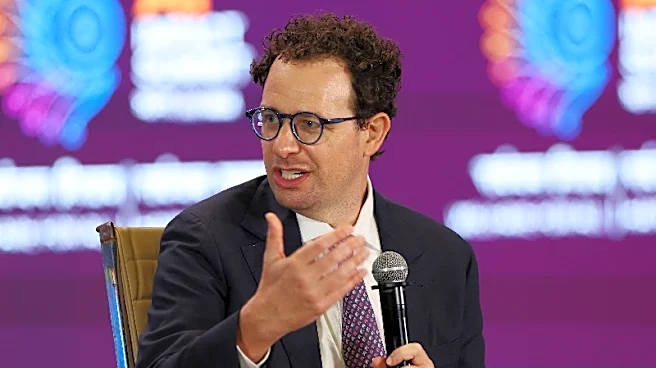
Rene Haas, CEO of Arm Holdings PLC, stated in a recent BBC interview that artificial intelligence (AI) will contribute to curing cancer within our lifetimes. Haas believes AI can address complex problems beyond human or current computer capabilities,
such as modeling how cancer impacts DNA markers, and will accelerate drug invention and testing by potentially replacing some trials. This projection comes amidst a broader trend of tech leaders, including OpenAI's Sam Altman and Google DeepMind's Demis Hassabis, making similar claims about AI's potential in healthcare. Haas's confidence is partly attributed to his background, having served on the board of AstraZeneca PLC, providing him insight into both computing power and medicine.
Why It's Important?
The assertion by a prominent tech CEO like Rene Haas about AI's role in curing cancer highlights the growing intersection of technology and healthcare, a critical area for U.S. innovation and public health. While promising, such bold predictions also generate significant debate among medical and scientific experts. The potential for AI to revolutionize drug discovery and clinical trials could drastically reduce the time and cost associated with developing new treatments, offering hope for millions affected by cancer. However, the pushback from experts like Chris Bakal, CEO of Sentinal4D, who argues against a 'brute force' approach of ever-larger data centers, underscores the need for targeted, patient-specific AI applications. This discussion is crucial for guiding research and investment in AI for healthcare, ensuring resources are directed towards effective and ethical solutions rather than speculative endeavors.
What's Next?
The debate surrounding AI's potential in cancer research is expected to intensify, with continued calls for a balanced approach that combines technological advancements with biological realities. Future developments will likely focus on refining AI models to be more patient-specific and integrated with real-world data, as advocated by experts like Chris Bakal. The tech industry, led by companies like Arm, will continue to develop more powerful chips and AI systems, while the medical community will work on validating these technologies through rigorous testing and clinical trials. This ongoing dialogue will shape public policy regarding AI in healthcare, influencing funding for research, regulatory frameworks for AI-driven treatments, and ethical guidelines for data usage. The ultimate goal remains the development of tangible, approved medicines that can effectively combat cancer.
Beyond the Headlines
The discussion around AI curing cancer extends beyond immediate medical breakthroughs to broader ethical and societal implications. The idea of AI solving complex biological problems raises questions about the nature of disease, the limits of computational power, and the role of human intuition in scientific discovery. Critics' concerns about 'brute force' AI approaches highlight the potential for misallocation of resources and the need for interdisciplinary collaboration between AI developers and medical researchers. Furthermore, the commercial interests of tech companies in promoting AI's capabilities in healthcare could influence public perception and investment, necessitating careful scrutiny. This ongoing narrative will shape how society views AI's potential, its limitations, and the ethical responsibilities associated with deploying such powerful technology in critical fields like medicine.