




What's Happening?
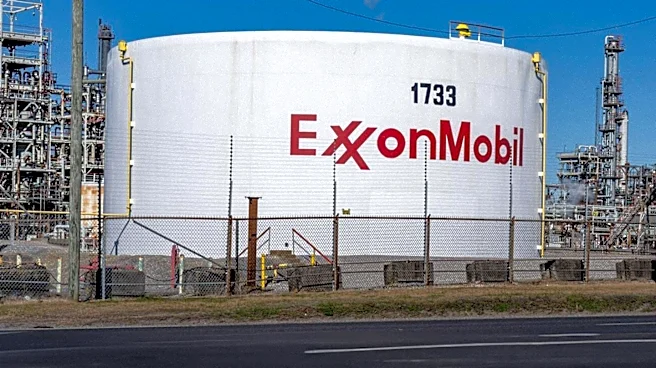
ExxonMobil's chief executive, Darren Woods, has clarified the company's strategic direction, stating that ExxonMobil has no intention of developing a power generation business. Instead, the company plans to collaborate with existing power providers and
significantly expand its carbon capture and storage initiatives. This approach contrasts with other oil majors like TotalEnergies and Shell, which are actively integrating power generation, including renewables and gas-fired plants, to meet the growing electricity demands of data centers. While NextEra Energy previously partnered with Exxon on a 1.2 gigawatt gas plant for a data center, Woods's statement at Exxon's annual meeting in May indicates a clear focus on carbon capture as a key technological solution for the future. The company's chief technology and engineering officer has also highlighted the potential of American gas reserves, particularly in the Permian Basin, as a future hub for data centers, suggesting that much of this resource is currently considered uneconomic to develop.
Why It's Important?
ExxonMobil's decision to prioritize carbon capture and storage over direct power generation has significant implications for the energy sector and the broader U.S. economy. By focusing on carbon capture, ExxonMobil is betting on a technology that Woods believes is essential for global decarbonization at scale. This strategy could position the company as a leader in carbon management solutions, potentially attracting partnerships and investments in this nascent but critical field. For the U.S., a robust carbon capture industry could help meet climate goals while continuing to utilize abundant natural gas resources, particularly in regions like the Permian Basin. This approach also suggests a different pathway for oil and gas companies to adapt to energy transition demands, focusing on emissions reduction rather than direct diversification into electricity production. The success of this strategy could influence future investment decisions across the energy industry and impact the development of large-scale infrastructure for carbon capture and storage.
What's Next?
ExxonMobil is expected to continue forging partnerships with power providers to implement its carbon capture and storage technologies. The company's emphasis on the Permian Basin as a potential location for data centers, powered by gas with integrated carbon capture, suggests future infrastructure development in that region. This could involve significant investments in pipelines for CO2 transport and storage facilities. The success of ExxonMobil's carbon capture projects will likely be closely watched by other energy companies and policymakers, as it could serve as a model for how the oil and gas industry can contribute to emissions reduction while maintaining its core business. Future announcements regarding specific carbon capture projects, partnerships, and technological advancements are anticipated as the company moves to scale this technology.
Beyond the Headlines
ExxonMobil's strategic pivot towards carbon capture and storage reflects a broader industry trend of energy companies seeking viable pathways to address climate change while leveraging their existing assets and expertise. This approach raises important questions about the role of fossil fuel companies in the energy transition and the economic viability of large-scale carbon capture. While carbon capture is seen by some as a crucial technology for hard-to-decarbonize sectors, others view it as a way to prolong the use of fossil fuels. The ethical and environmental implications of relying on carbon capture at scale, including potential leakage risks and the energy intensity of the process, will be subject to ongoing scrutiny. Furthermore, the development of carbon capture infrastructure could create new economic opportunities and jobs in regions with significant natural gas reserves, but it also requires substantial regulatory support and public acceptance.