










What's Happening?
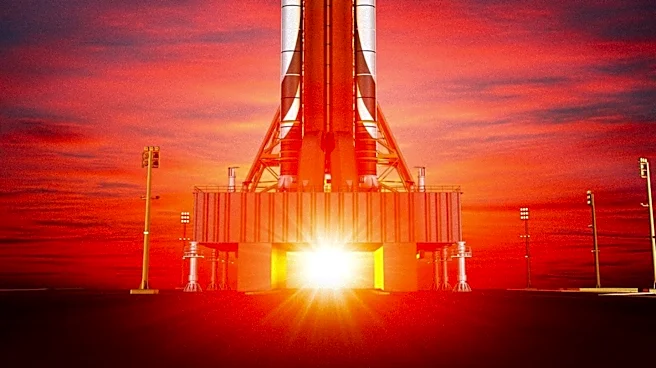
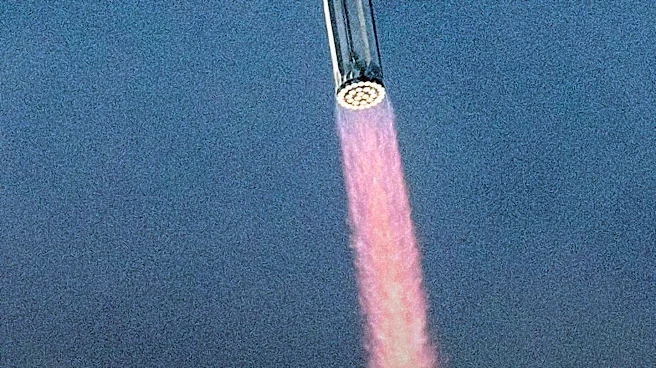
SpaceX is preparing for its 13th test flight of the Starship rocket, incorporating new engine fixes, a revised flip maneuver, and fresh heat-shield experiments. The test aims to achieve a clean separation of the rocket booster from the ship, followed
by a controlled splashdown in the Gulf of Mexico. This flight will also carry 20 real satellites, including Starlink V3 internet satellites equipped with cameras and sensors to monitor the rocket's heat shield. The launch is part of SpaceX's efforts to develop a reusable rocket capable of supporting NASA's moon landings and future Mars missions.
Why It's Important?
The 13th test flight of Starship represents a critical step in SpaceX's mission to create a reusable rocket system that can support deep space exploration. The successful deployment of satellites and the testing of new technologies are essential for advancing SpaceX's capabilities and achieving its long-term goals. This test also underscores the importance of iterative testing and rapid development in the aerospace industry. The outcome of this flight could influence future space missions and the viability of SpaceX's plans for Mars exploration.
What's Next?
SpaceX will continue to refine its rocket technology based on the results of this test flight. The company plans to conduct further tests and make necessary adjustments to improve the performance and reliability of the Starship system. The success of these efforts will be crucial for SpaceX's ability to fulfill its commitments to NASA and other stakeholders. The aerospace community will be closely monitoring the test results and their implications for future space exploration initiatives.