





What's Happening?
A coalition of financial services trade associations, including the American Bankers Association (ABA), Bank Policy Institute (BPI), and others, has submitted comments to the Federal Communications Commission (FCC) in strong support of its proposal to strengthen
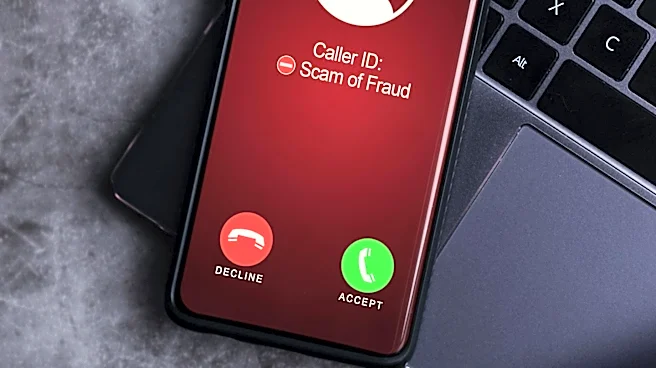
the Robocall Mitigation Database. These groups emphasize that fraudsters frequently use illegally spoofed calls to impersonate financial institutions, government agencies, and other trusted organizations, leading to substantial financial harm for consumers. A recent survey of banks indicated a 124% increase in identified bank-impersonation scams originating from phone calls or text messages between 2024 and 2025. The associations commend the FCC's efforts to require voice service providers to take more robust steps to prevent illegally spoofed calls and to authenticate caller identities, as well as to implement a 'Robocall Mitigation Scorecard' to assess providers' effectiveness.
Why It's Important?
This initiative is important for U.S. consumers and the financial services industry. Illegally spoofed calls pose a significant threat, enabling fraud that can result in the theft of login credentials, account takeovers, and substantial financial losses for individuals and businesses. By strengthening the Robocall Mitigation Database and imposing stricter requirements on voice service providers, the FCC aims to reduce the prevalence of these fraudulent calls, thereby protecting consumers and enhancing trust in the telecommunications system. For financial institutions, this could lead to a decrease in fraud-related losses and a more secure environment for their customers. The broad support from financial services groups underscores the widespread impact of robocall fraud and the perceived necessity of regulatory intervention to combat it effectively.
What's Next?
The financial services associations urge the FCC to finalize its proposals as soon as feasible. The FCC's proposals include requiring originating providers to 'know their customer' by collecting specific information before allowing them to originate calls, and strengthening the 'STIR/SHAKEN' call authentication framework. The implementation of a 'Robocall Mitigation Scorecard' is also under consideration, which would rate voice service providers' effectiveness in combating illegal calls. The next steps involve the FCC reviewing all submitted comments and moving towards finalizing these rules. Successful implementation is expected to lead to a reduction in illegal robocalls and a more secure communication environment for consumers and businesses.
Beyond the Headlines
The deeper implications of this effort extend to the evolving nature of cybercrime and the need for collaborative solutions across industries and regulatory bodies. The rise in bank-impersonation scams highlights how fraudsters adapt their tactics, leveraging technology to exploit vulnerabilities in communication systems. The FCC's proposals, supported by financial institutions, represent a recognition that combating such sophisticated fraud requires a multi-faceted approach, involving both technological solutions (like STIR/SHAKEN) and regulatory mandates. This collaboration between government and industry could set a precedent for addressing other forms of digital fraud and cyber threats. Furthermore, the emphasis on 'knowing your customer' for voice service providers could lead to broader discussions about accountability within the telecommunications ecosystem and the role of service providers in preventing illicit activities on their networks.