




What's Happening?
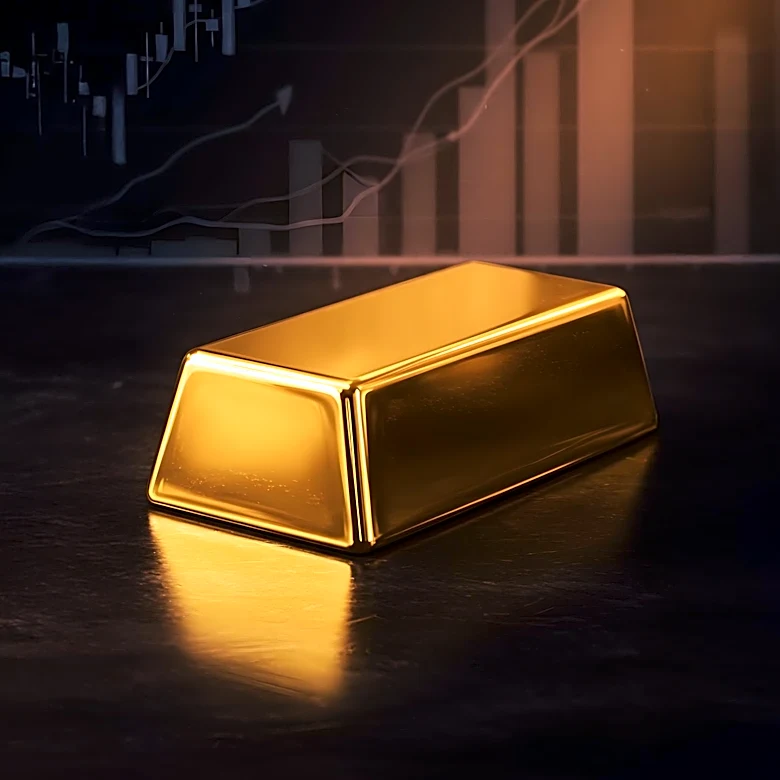
Gold prices experienced a recovery on Monday, climbing from a more than one-year low as investors engaged in bargain hunting. Spot gold increased by 3.5% to $3,654.97 per ounce by 2:10 p.m. ET, following a significant drop last Friday that saw it hit
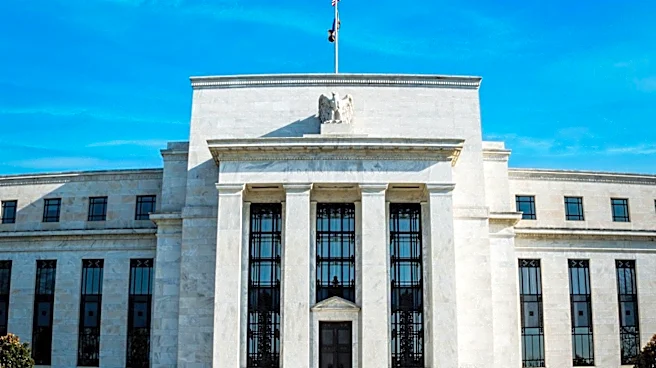
its lowest level since September 2025. US gold futures also saw gains, rising 4% to $3,653.70 per ounce. This rebound comes after gold prices fell over 9% last week, a decline attributed to an AI-linked stocks selloff that prompted some investors to liquidate gold to meet margin requirements. Market participants are now keenly awaiting the release of the October Personal Consumption Expenditures (PCE) index, the Federal Reserve's preferred inflation measure, scheduled for Wednesday. This data is expected to provide further insights into price pressures and influence the Federal Reserve's future interest rate decisions.
Why It's Important?
The fluctuation in gold prices and the market's focus on upcoming US inflation data are critical indicators for the broader U.S. economy and financial markets. Gold, often seen as a safe-haven asset, tends to lose appeal when interest rates rise, as it offers no yield. Therefore, the Federal Reserve's stance on interest rates, heavily influenced by inflation data, directly impacts gold's valuation. A potential December Fed rate hike, though widely anticipated to be 25 basis points rather than a larger 50 basis points, continues to weigh on investor sentiment regarding non-yielding bullion. The recent selloff in AI-linked stocks and its ripple effect on gold highlight the interconnectedness of various asset classes and how broader market movements can trigger liquidations across different investment vehicles. This scenario underscores the sensitivity of gold to both monetary policy expectations and overall market liquidity conditions.
What's Next?
The immediate focus for investors will be the release of the October Personal Consumption Expenditures (PCE) index on Wednesday. This inflation data will be crucial in shaping expectations for the Federal Reserve's monetary policy decisions, particularly regarding the likelihood and magnitude of future interest rate hikes. Analysts from Goldman Sachs anticipate that while downward pressure on gold may eventually reverse, this could happen more slowly towards year-end. They suggest that some hedge funds might be hesitant to rebuild risk positions before the end of the year, and the expected December Fed hike could further delay the rebuilding of gold long positions despite reduced speculative positioning. The market will closely monitor the Fed's communications and subsequent economic data to gauge the trajectory of interest rates and its implications for gold and other financial assets.
Beyond the Headlines
The recent volatility in gold prices, influenced by both inflation expectations and broader stock market movements, points to a complex interplay of factors in the current economic environment. The liquidation of gold to cover margin calls in the wake of an AI-linked stock selloff illustrates how systemic risks in one sector can spill over into seemingly uncorrelated assets. This highlights the increasing interconnectedness of global financial markets and the potential for rapid shifts in investor sentiment. Furthermore, the ongoing debate around the Federal Reserve's interest rate policy and its impact on inflation underscores the delicate balance central banks must maintain to ensure economic stability. The role of gold as an inflation hedge and a safe haven is continually being re-evaluated in an era of evolving technological advancements and shifting economic paradigms, making its price movements a key barometer of market confidence and economic outlook.