








What's Happening?
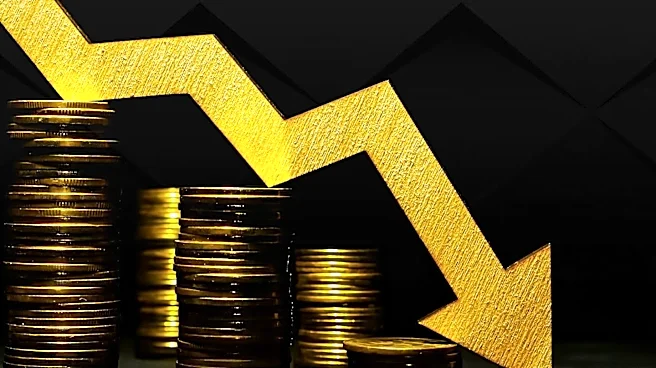
The World Gold Council's latest report highlights the sensitivity of gold prices to macroeconomic conditions, geopolitical risks, and investor sentiment. In the first half of the year, gold prices reached record highs before experiencing a decline. The report notes
that gold remains one of the top-performing commodities despite a 7% drop since January. The current price levels reflect moderate global growth, elevated inflation, and expectations of limited central bank tightening. The report suggests that worsening economic conditions, geopolitical shocks, or changes in interest rate expectations could drive gold prices higher.
Why It's Important?
The performance of gold prices is a critical indicator of broader economic and geopolitical trends. As a traditional safe-haven asset, gold's price movements can reflect investor confidence and risk perceptions. The current volatility in gold prices underscores the uncertainty in global markets, influenced by factors such as inflation, central bank policies, and geopolitical tensions. For investors and policymakers, understanding these dynamics is crucial for making informed decisions. The potential for gold prices to rise again could impact investment strategies and economic forecasts.
What's Next?
Looking ahead, the gold market will likely continue to be influenced by macroeconomic indicators and geopolitical developments. Investors will be closely watching central bank policies, inflation trends, and geopolitical events for signals that could affect gold prices. The report suggests that a strong, clear signal could push gold prices sustainably higher, potentially reaching $5,000/oz. Additionally, central bank demand and policy shifts in key markets like India could play a significant role in shaping the future trajectory of gold prices.
Beyond the Headlines
Beyond immediate price fluctuations, the gold market's performance could have long-term implications for global economic stability and investment strategies. As a hedge against inflation and economic uncertainty, gold's role in diversified portfolios may become increasingly important. The interplay between gold prices and other economic indicators could also influence monetary policy decisions and international trade dynamics. Understanding these complex relationships is essential for stakeholders navigating the evolving economic landscape.