



What's Happening?
Australian satellite IoT company Myriota has successfully closed the first tranche of its Series C funding round, raising US$38.8 million. This initial close was led by Main Sequence Ventures and the National Reconstruction Fund Corporation (NRFC), with
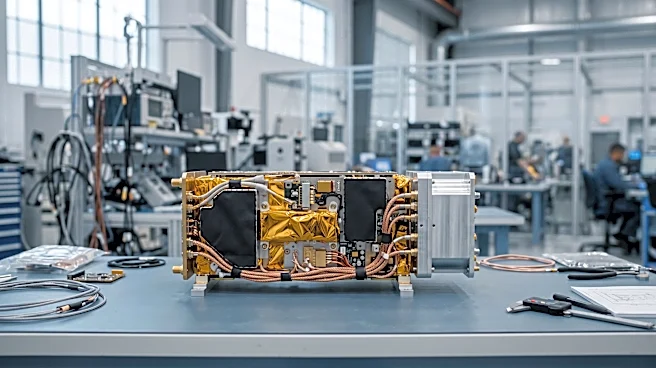
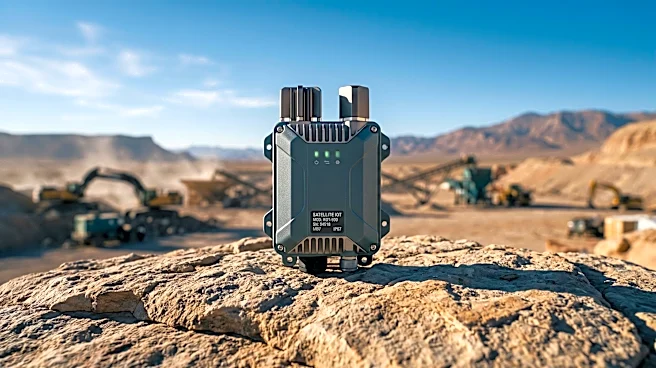
additional participation from Hostplus and new investor Funds SA. The capital infusion is earmarked for several key initiatives, including expanding into new industrial verticals and international markets. Furthermore, a significant portion of the funds will support the development and launch of next-generation satellites. Myriota's platform is designed to connect industrial IoT devices in remote areas, facilitating the tracking of mining equipment and trailers, and monitoring essential resources such as fuel tanks, livestock water supplies, and off-grid solar systems. The company expedited this first close, securing the funds in 100 days, ahead of its original schedule. Myriota has already launched 16 satellites in 2026, with further launches planned for 2027 and 2028, bringing its total funding past US$103.5 million. The full Series C round is anticipated to conclude in early 2027.
Why It's Important?
This significant funding round for Myriota underscores the growing investor confidence and strategic importance of satellite IoT technology in addressing real-world challenges, particularly in remote and underserved areas. The expansion into new industrial verticals and international markets signifies a broader application of IoT solutions, potentially enhancing operational efficiencies and resource management across various sectors. For U.S. industries with remote operations, such as agriculture, mining, and logistics, Myriota's advancements could offer more robust and reliable connectivity options where traditional terrestrial networks are insufficient. The investment also highlights the competitive landscape in the satellite IoT sector, as evidenced by the substantial funding raised by U.S. rival Hubble Network. This competition is likely to drive innovation and accelerate the deployment of advanced IoT solutions, ultimately benefiting businesses seeking to optimize their remote asset tracking and monitoring capabilities. The successful and expedited first close reflects a strong market appetite for scalable and effective satellite-based communication technologies.
What's Next?
Myriota plans to utilize the newly acquired capital to accelerate its expansion into new industrial verticals and international markets. This strategic move suggests an increased global footprint for its satellite IoT services, potentially impacting how various industries manage remote assets worldwide. The company is also committed to the development and launch of next-generation satellites, which will enhance its network capabilities and service offerings. With further satellite launches booked for 2027 and 2028, Myriota is poised to strengthen its infrastructure and capacity. The full Series C round is expected to close in early 2027, which could bring additional capital and further solidify Myriota's position in the competitive satellite IoT market. The success of this round and the subsequent expansion will be closely watched by stakeholders in the technology and industrial sectors, as it could set new benchmarks for satellite-enabled IoT solutions.
Beyond the Headlines
The rapid growth and substantial investment in companies like Myriota highlight a broader trend towards leveraging space-enabled technologies to solve terrestrial problems, particularly in areas lacking conventional infrastructure. This development has significant implications for global connectivity, potentially bridging the digital divide for remote communities and industries. The ethical considerations surrounding data privacy and security for industrial IoT devices, especially those operating in critical infrastructure, will become increasingly pertinent as these networks expand. Furthermore, the environmental impact of launching and maintaining a growing constellation of satellites, including concerns about space debris, will require careful consideration and international cooperation. The increasing reliance on satellite IoT for essential services could also raise questions about resilience and redundancy in the face of potential disruptions, such as cyberattacks or space weather events. This technological shift represents a fundamental change in how industries operate, moving towards a more interconnected and data-driven future.