





What's Happening?
SpaceX is actively pursuing plans to establish Starlink Mobile as a significant competitor to established U.S. mobile carriers like AT&T, Verizon, and T-Mobile. The company aims to achieve this by integrating Qualcomm's cellular technology into tens of
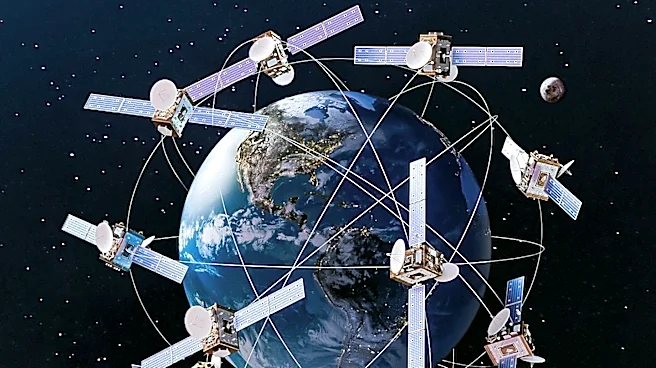
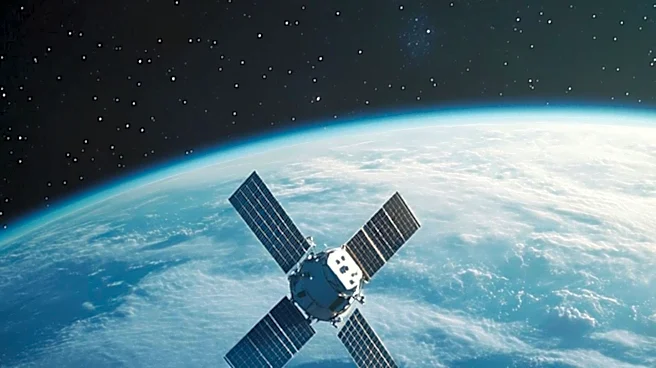
thousands of 5G cell sites, with deployment scheduled to begin in 2027. SpaceX has already launched thousands of direct-to-cell satellites into orbit to support this initiative. Additionally, reports indicate that SpaceX is in discussions to acquire Boost Mobile, a move that would provide Starlink Mobile with an immediate retail brand and customer base. This expansion follows SpaceX's previous acquisition of a substantial block of low-band spectrum, crucial for enhancing its service capabilities. The current Starlink constellation comprises 13,096 launched satellites, with 11,207 remaining in orbit and 11,193 actively working.
Why It's Important?
This strategic move by SpaceX has the potential to significantly disrupt the U.S. telecommunications industry. By entering the mobile carrier market, Starlink Mobile could introduce increased competition, potentially leading to lower prices and improved services for consumers. The integration of satellite-based internet with terrestrial 5G networks could also bridge the digital divide, providing high-speed internet access to underserved rural areas where traditional infrastructure is lacking. However, the ambitious nature of this undertaking, particularly the estimated cost of over $200 billion for infrastructure buildout, presents a substantial financial risk for SpaceX. Incumbent carriers are taking these plans seriously, as evidenced by comments from T-Mobile's CEO, highlighting the potential for a major shift in market dynamics. The success of Starlink Mobile could redefine how mobile connectivity is delivered across the nation.
What's Next?
The rollout of Qualcomm's cellular technology in 5G cell sites is slated to commence in 2027. The reported negotiations for the acquisition of Boost Mobile are ongoing and, if successful, would accelerate Starlink Mobile's market entry. A key challenge for SpaceX will be to demonstrate that its satellite coverage can effectively support a carrier business while the extensive ground network is being constructed. Industry analysts, such as Walter Piecyk of LightShed Partners, view this as an ambitious and costly gamble. The coming years will reveal whether SpaceX can overcome the significant logistical and financial hurdles to establish itself as a major player in the U.S. mobile market. The company's progress will be closely watched by both consumers and competitors, as it could set a new precedent for integrated satellite and terrestrial communication services.
Beyond the Headlines
SpaceX's foray into the mobile carrier market represents a convergence of space technology and everyday telecommunications, blurring the lines between traditional internet service providers and mobile operators. This development could lead to innovative service models and potentially challenge regulatory frameworks designed for distinct industries. The ethical implications of a single company controlling both satellite internet infrastructure and a significant portion of mobile communication could also become a point of discussion, particularly concerning data privacy and market dominance. Furthermore, the sheer scale of the planned satellite constellation and ground infrastructure raises environmental considerations regarding space debris and energy consumption. This initiative could fundamentally alter the landscape of digital access and connectivity, impacting everything from remote work capabilities to emergency communication systems across the U.S.