

What's Happening?
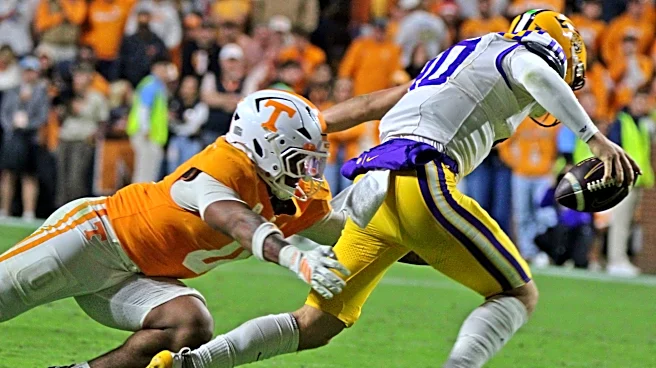
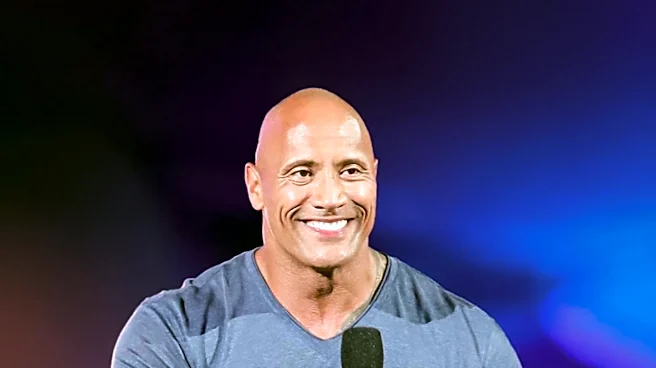
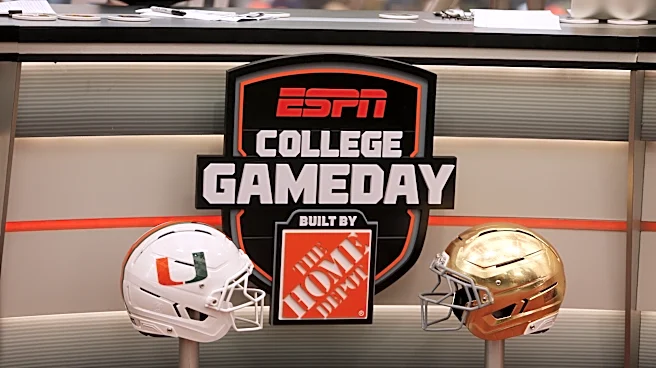
Dwayne 'The Rock' Johnson, appearing as a guest picker on ESPN's College GameDay, issued an on-air apology to the network after recounting a profane quote from his former coach, Ed Orgeron. While discussing his pick for the LSU vs. Tennessee game, Johnson recalled
Orgeron telling him, 'Dewey, you got great upper body violence, but you're stopping the run like dog s---.' Johnson immediately followed this by saying, 'Sorry, ESPN, but he did say that.' The incident occurred during the segment where Johnson was making his game predictions. Despite his personal connection to LSU through Orgeron, who coached him at Miami, Johnson ultimately picked No. 9 Tennessee to win, aligning with the rest of the panel. Earlier in the show, Johnson also engaged in a physical stunt with Pat McAfee, putting him through a table, and McAfee later recreated a GameDay pool stunt.
Why It's Important?
This event highlights the dynamic and often unpredictable nature of live sports broadcasting, particularly shows like College GameDay that blend sports analysis with entertainment. Johnson's spontaneous apology underscores the network's standards regarding language, even when delivered in a humorous or anecdotal context by a celebrity guest. For ESPN, maintaining a certain level of decorum is crucial for its broad audience, which includes families. For Johnson, it demonstrates his ability to engage audiences with his charismatic personality while also acknowledging broadcast etiquette. The incident also reinforces the cultural impact of college football, where even a brief, unscripted moment can become a talking point among fans and media, showcasing the blend of sports, celebrity, and live television that captivates millions.
What's Next?
While no direct consequences are expected from Johnson's apology, the event may serve as a minor reminder for future celebrity guests on live broadcasts to be mindful of language. ESPN will likely continue its approach of balancing engaging, unscripted moments with adherence to broadcast standards. For College GameDay, the incident is likely to be viewed as another memorable, albeit slightly controversial, moment that adds to the show's reputation for lively and entertaining segments. Fans and media will continue to discuss such instances as part of the broader narrative of live sports television, contributing to the show's ongoing appeal and viewership.
Beyond the Headlines
The incident subtly touches upon the evolving landscape of media and entertainment, where the lines between professional sports commentary and casual, often unfiltered, celebrity interaction are increasingly blurred. While Johnson's apology was swift, it reflects the constant negotiation between authenticity and corporate guidelines in live television. It also speaks to the enduring influence of coaching figures like Ed Orgeron, whose memorable, albeit colorful, language can be recalled years later by former players. This blend of personal anecdotes, celebrity presence, and live television creates a unique viewing experience that often generates viral moments, shaping public perception and engagement with sports media beyond just the game results.