

What's Happening?
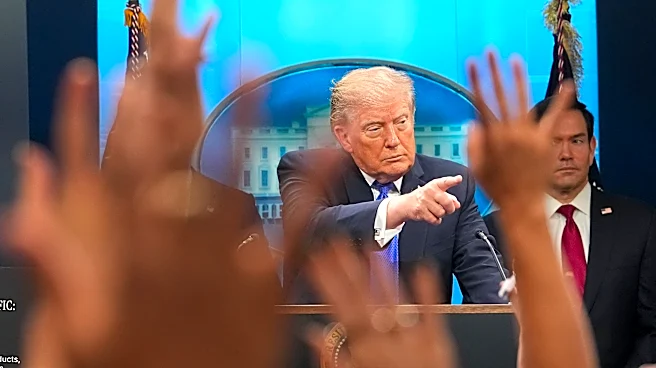
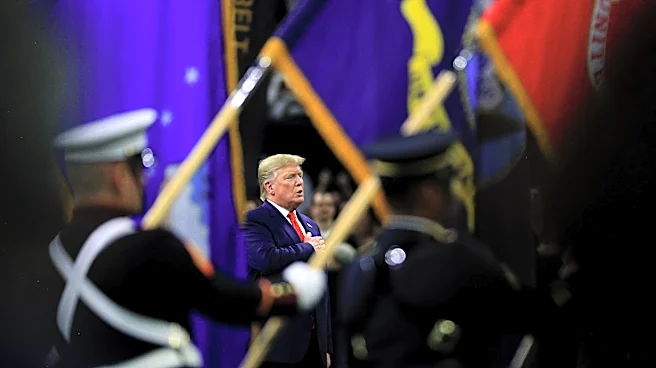
President Trump announced that the U.S. Marine Band has received its first-ever Grammy Award nomination. The nomination is for 'best orchestral performance' for 'John Williams and 'The President’s Own,' Vol. 3,' with composer John Williams credited as conductor
and the U.S. Marine Band listed among the performers. This marks a significant milestone for the band, which was established in 1798 and regularly performs at presidential ceremonies and national events. President Trump made the announcement during a White House reception on the South Lawn's new helipad. He also stated that he and UFC President Dana White would donate $500,000 to the band, an increase from an initial $200,000, inspired by the UFC Freedom 250 event held outside the White House in June as part of the president's 80th birthday celebration. Lt. Col. Ryan Nowlin, the band's director, expressed gratitude for the donation and described the band as 'the living embodiment of American history' and 'an American treasure.' The 2027 Grammy Awards are scheduled for February 7 in Los Angeles.
Why It's Important?
The Grammy nomination for the U.S. Marine Band highlights the cultural significance of military ensembles within American society and the arts. This recognition by the Recording Academy elevates the band's profile beyond its traditional ceremonial roles, potentially increasing public awareness and appreciation for its musical contributions. For the band members, it represents an unprecedented acknowledgment of their artistic excellence on a national stage. The substantial donation from President Trump and UFC President Dana White provides significant financial support, which can be crucial for the band's operations, outreach programs, and continued musical development. This event also underscores the intersection of politics, entertainment, and philanthropy, as a presidential announcement and a celebrity donation bring attention to a long-standing national institution. The band's director emphasized its role in bringing music to various communities, including veterans and grieving families, making the nomination and donation impactful for both the ensemble and its audience.
What's Next?
The U.S. Marine Band will await the results of the 2027 Grammy Awards, scheduled for February 7 in Los Angeles, where winners will be selected by Recording Academy voting members. The nomination itself is expected to generate increased visibility and potential performance opportunities for the band. The $500,000 donation from President Trump and UFC President Dana White will likely be allocated towards supporting the band's operations, potentially funding new projects, equipment, or outreach initiatives. This recognition could also inspire other military bands or government-affiliated musical groups to pursue similar artistic endeavors and seek broader public and critical acclaim. The event may also set a precedent for future collaborations between political figures, sports personalities, and cultural institutions, potentially leading to more philanthropic support for the arts.
Beyond the Headlines
This Grammy nomination for the U.S. Marine Band transcends a simple award, touching upon deeper themes of national identity, cultural preservation, and the role of military personnel in the arts. The band, often referred to as 'The President's Own,' serves as a symbol of American tradition and excellence, performing at critical national events. Its recognition by the Recording Academy challenges conventional perceptions of military bands, showcasing their artistic merit beyond ceremonial duties. This event also highlights the enduring legacy of composers like John Williams, whose work continues to resonate across different genres and institutions. The involvement of President Trump and UFC President Dana White in both the announcement and the donation underscores the powerful influence of public figures in shaping cultural narratives and directing philanthropic efforts. It also raises questions about the intersection of government, entertainment, and the arts, and how such high-profile endorsements can impact the funding and public image of national cultural institutions.