




What's Happening?
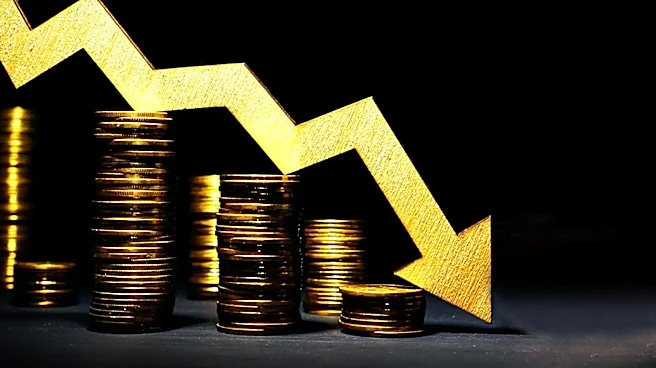
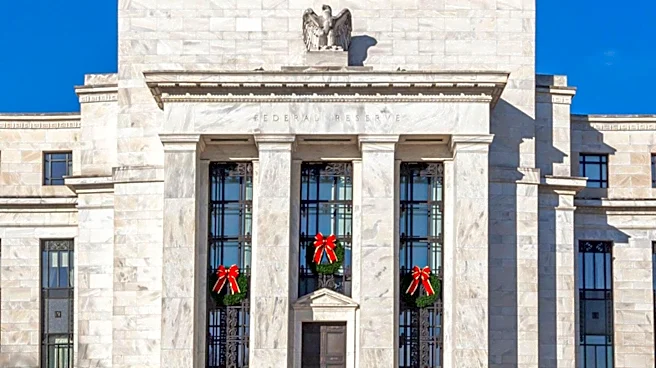
Gold prices are currently trading near $4,045.15, reflecting a 21.6% increase year-on-year but remaining below the record high set in January. The market is closely watching the Federal Reserve's policy decisions, with futures markets indicating a potential
rate rise. Geopolitical tensions in the Middle East have eased, affecting safe-haven demand. Analysts have varied predictions for gold's future, with some forecasting a bearish target of $2,575 per ounce, while others, like Goldman Sachs, predict a rise to $4,900 per ounce by the end of 2026. The gold market is influenced by factors such as US dollar movements, ETF outflows, and central-bank buying.
Why It's Important?
The fluctuations in gold prices have significant implications for investors and the broader economy. A potential rate hike by the Federal Reserve could strengthen the US dollar, impacting gold's appeal as a safe-haven asset. The diverse predictions from analysts highlight the uncertainty in the market, which could affect investment strategies. Central-bank buying and ETF outflows are critical factors that could influence gold's trajectory. The outcome of the Federal Reserve's policy decisions will be crucial in determining the direction of gold prices, affecting stakeholders ranging from individual investors to large financial institutions.
What's Next?
The Federal Reserve's upcoming policy decision is a key event that could influence gold prices. If the Fed decides to raise rates, it could lead to a stronger dollar and potentially lower gold prices. Conversely, if the Fed maintains current rates, gold could remain an attractive investment. Analysts will continue to monitor geopolitical developments and economic indicators to adjust their forecasts. Investors should be prepared for potential volatility in the gold market as these factors unfold.