





What's Happening?
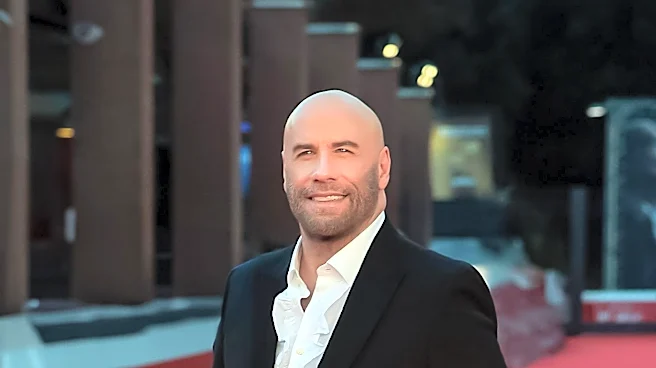
The 1985 film 'Perfect,' starring John Travolta and Jamie Lee Curtis, is being re-examined as a significant cultural time capsule of the 1980s. Originally released to mixed reviews, the movie is now appreciated for its authentic portrayal of the era's
fitness craze, particularly the aerobics phenomenon. Travolta plays Adam Lawrence, a Rolling Stone reporter investigating health clubs as new social hubs, while Curtis portrays Jessie Wilson, an aerobics instructor. The film captures the fashion, music, and workout routines of the time with remarkable seriousness, making it a unique snapshot of 1985 culture, including the rise of fitness clubs as social scenes and the explosion of aerobics across America.
Why It's Important?
The re-evaluation of 'Perfect' as an '80s time capsule is important because it highlights how cultural artifacts, initially dismissed, can gain significant value over time as historical documents. The film's authentic depiction of the aerobics craze and the evolving social landscape of fitness clubs provides valuable insight into a specific period of American popular culture. This shift in perception underscores the idea that movies, even those not critically acclaimed at their release, can offer unique sociological and historical perspectives decades later. For film enthusiasts and cultural historians, 'Perfect' now serves as a tangible record of the 1980s, showcasing trends and societal shifts that might otherwise be forgotten or romanticized.
What's Next?
The renewed interest in 'Perfect' as an '80s time capsule may lead to increased viewership and critical re-appraisal of other films from that era that were not initially considered masterpieces. This could spark a broader trend of re-examining older movies for their cultural and historical significance, beyond their initial critical reception. Streaming platforms might highlight 'Perfect' and similar films, making them more accessible to new audiences interested in historical pop culture. This could also influence academic studies on film and cultural history, encouraging deeper analysis of how cinema reflects and shapes societal trends, particularly in periods of rapid cultural change.
Beyond the Headlines
The deeper implications of 'Perfect's' re-evaluation touch upon the ephemeral nature of popular culture and the long-term impact of media on collective memory. The film's initial reception versus its current status as a time capsule reveals how cultural values and perspectives shift over decades. It also highlights the often-unintentional role of art in documenting societal trends, fashion, and social behaviors. This phenomenon encourages a broader understanding of cultural heritage, where even seemingly trivial elements of popular culture can become invaluable historical markers. It prompts reflection on how contemporary media might be viewed by future generations, emphasizing the importance of preserving and analyzing all forms of cultural output.