







What's Happening?
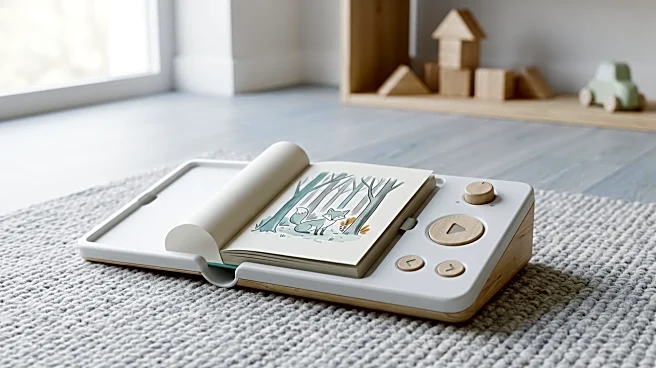
Cali, a children's brand, has launched the Cali Reader, a new screen-free physical audiobook designed to enhance foundational literacy skills in emerging readers. This device allows children to engage with interactive storybooks by snapping them into
the Reader and pressing paper pages to hear the story aloud, accompanied by hand-drawn illustrations. The Cali Reader incorporates three educator-designed games and word-recognition activities per book, and also enables loved ones to record up to 60 seconds of their voice on each page. Developed with insights from a partnership with the Joan Ganz Cooney Center at Sesame Workshop, and supported by the National Science Foundation and National Institutes of Health, the Cali Reader aims to use technology to foster a love for reading without relying on screens. Early research from a pilot study involving 85 first-grade students indicated that children using the Cali Reader showed significantly greater improvements in reading enjoyment, phonics, oral reading fluency, and vocabulary compared to a control group. The device is now available for pre-order, with shipments expected in mid-October.
Why It's Important?
The introduction of the Cali Reader is significant for U.S. families and educators grappling with the balance of technology and early childhood development. In an era dominated by digital screens, this product offers a unique approach to literacy by combining the tactile experience of a physical book with interactive audio technology. This initiative addresses growing concerns among parents and child development experts about excessive screen time and its potential impact on children's cognitive and social development. By providing a screen-free alternative, Cali Reader supports independent play and encourages children to engage with stories in a way that promotes focus and imagination, rather than passive consumption. The positive results from the pilot study suggest that this tool could be effective in improving key reading skills, offering a valuable resource for parents and schools looking to foster early literacy in a healthy, balanced manner. This product also highlights a broader trend in the U.S. market towards educational tools that prioritize traditional learning methods while leveraging technological advancements responsibly.
What's Next?
The Cali Reader is currently available for pre-order through calisbooks.com and Amazon, with initial orders slated to ship in mid-October. The company is offering a limited-time launch deal that includes the Cali Reader and three stories for $99. Following its release, the success of the Cali Reader will likely be measured by its adoption rate among U.S. families and educational institutions, as well as further research into its long-term impact on child literacy and development. Cali may expand its library of compatible books and introduce new features based on user feedback. The product's performance could also influence other children's media companies to explore similar screen-free or low-screen interactive learning solutions, potentially shifting market trends in educational technology. Continued partnerships with organizations like the Joan Ganz Cooney Center will be crucial for maintaining the educational integrity and effectiveness of future offerings.
Beyond the Headlines
The Cali Reader's emergence reflects a deeper societal conversation in the U.S. about the role of technology in children's lives and the increasing desire for 'unplugged' experiences. This product taps into a growing sentiment among parents, including those in the tech industry, who are becoming more cautious about their children's screen exposure. The emphasis on tactile interaction and independent play aligns with developmental psychology principles that stress the importance of hands-on learning for young children. This trend could lead to a re-evaluation of educational technology, moving away from purely screen-based solutions towards hybrid models that integrate physical and digital elements. Furthermore, the Cali Reader's success could inspire broader innovation in the children's entertainment and education sectors, encouraging the development of products that prioritize cognitive development, creativity, and social interaction over passive screen engagement. It also underscores the ethical responsibility of technology companies to design products that support healthy child development.