
What's Happening?
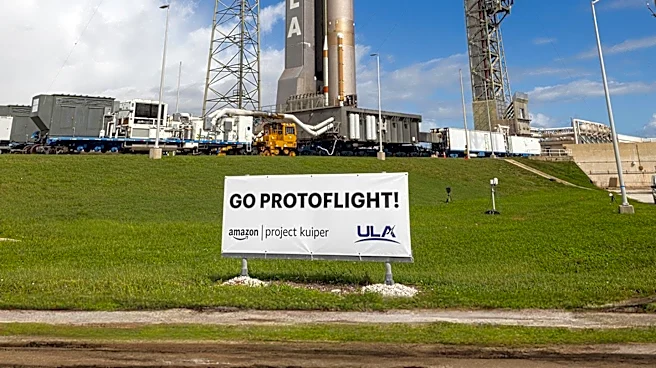
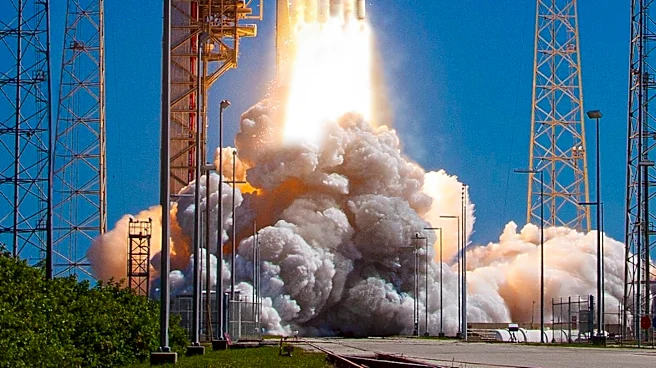
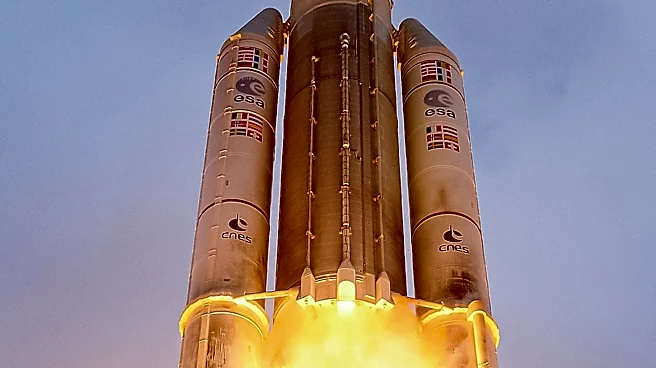
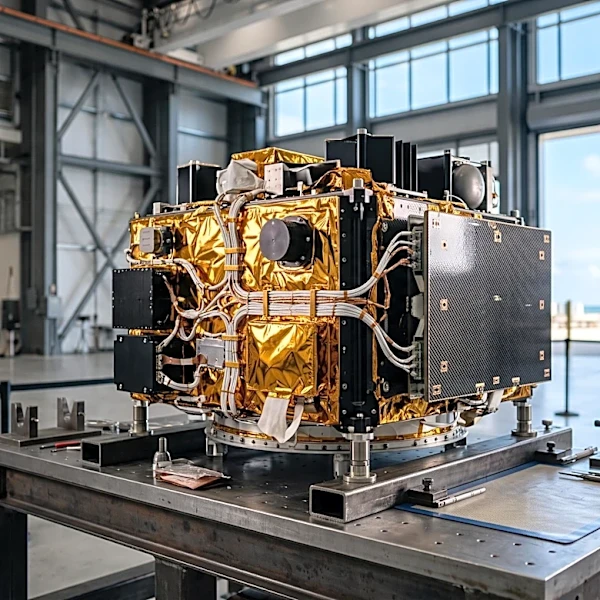
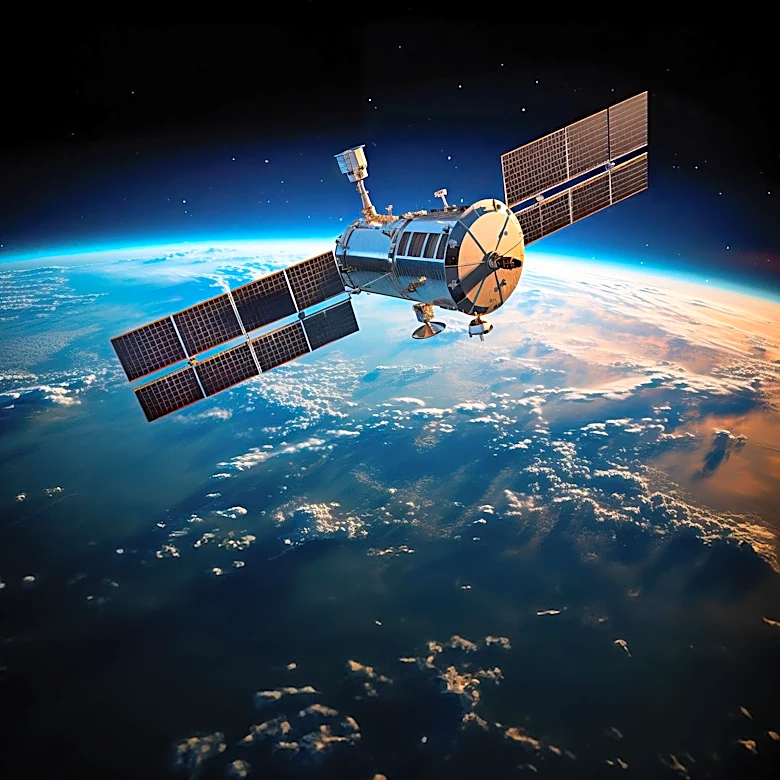
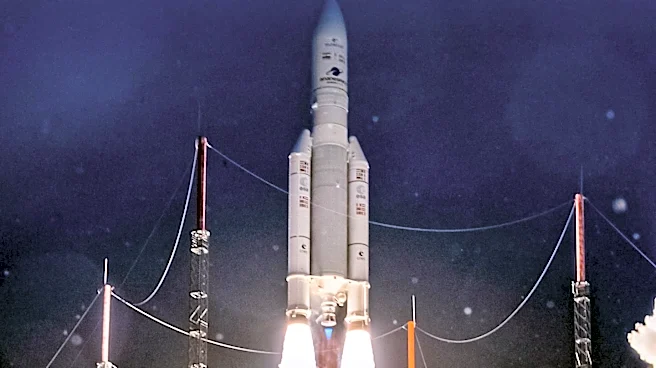
Arianespace successfully launched 36 Amazon Leo satellites into orbit on November 24, 2026, from Europe's Spaceport in Kourou, French Guiana. This mission occurred nine days after a United Launch Alliance (ULA) Vulcan rocket failed during an Amazon Leo mission on November 15,
which resulted in the loss of 40 satellites. The Vulcan rocket experienced low booster performance shortly after liftoff, and an investigation into the root cause is ongoing, with early data suggesting Vulcan's first stage as a factor. ULA remains Amazon Leo's primary contracted provider, but the rocket is currently grounded. This successful Ariane 6 launch, its 10th flight and fourth dedicated Amazon Leo mission, brings the total in-orbit count for Amazon Leo to 432 satellites, according to Ars Technica and Satellite Today.
Why It's Important?
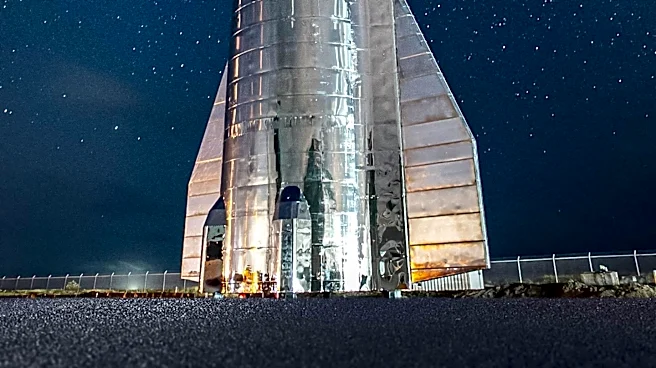
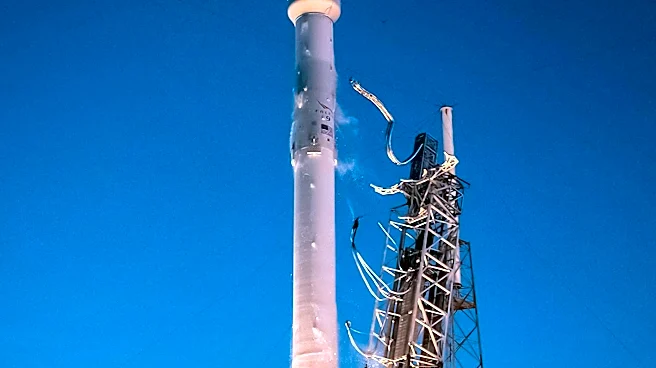
The successful launch by Arianespace is crucial for Amazon's Project Kuiper, its satellite broadband constellation, especially after the recent Vulcan failure. The grounding of ULA's Vulcan rocket, Amazon's primary launch provider, has put significant pressure on Amazon's deployment schedule. This incident highlights the challenges and dependencies in large-scale satellite constellation deployments, where a single launch failure can have cascading effects on timelines and operational readiness. Amazon is now accelerating a Falcon 9 mission and expects additional Falcon 9 flights, placing it in the unusual position of relying on a competitor's rocket (SpaceX's Falcon 9) to deploy a network designed to compete with Starlink. The delay in Blue Origin's New Glenn return to flight further increases Amazon's near-term reliance on Ariane 6 and Falcon 9, impacting its ability to begin commercial broadband service, which was previously targeted for 2025.
What's Next?
Amazon's immediate next steps involve accelerating a Falcon 9 mission to December, originally planned for next year, with more Falcon 9 missions expected to follow. The investigation into the Vulcan rocket failure is ongoing, and its findings will determine corrective actions and when ULA can resume launches for Amazon. Blue Origin's New Glenn, another contracted provider, is reportedly aiming for a return to flight early next year. These three developments—the accelerated Falcon 9 flights, the Vulcan investigation, and New Glenn's return—will significantly influence Amazon Leo's ability to recover its deployment schedule. Amazon has expanded its commitment with Arianespace to 24 launches, with another Ariane 6 mission anticipated before the end of December, as European ministers consider authorizing additional rocket construction to increase launch cadence.
Beyond the Headlines
The recent launch failure and subsequent reliance on competitor rockets underscore the complex and competitive landscape of the commercial space industry. Amazon's Project Kuiper, with hundreds of finished satellites awaiting launch, faces a critical bottleneck in launch capacity. This situation highlights the strategic importance of diversified launch contracts and the inherent risks associated with developing and deploying large satellite constellations. The need for increased launch cadence from providers like Arianespace, coupled with the ongoing investigations and delays from other partners, illustrates the delicate balance between innovation, reliability, and market competition in the race to provide global satellite broadband services. The long-term implications could reshape partnerships and investment strategies within the space sector as companies strive to meet ambitious deployment targets.