






What's Happening?
Indonesia's economy expanded by 5.47% in the third quarter compared to the previous year, surpassing the 5.18% forecast in a Reuters poll. This growth marks an acceleration from the 5.29% recorded in the second quarter. The expansion was primarily supported
by robust performance in sectors such as manufacturing, particularly the processing of palm oil for fuel, as Indonesia broadened its mandatory biodiesel program. Despite this positive performance, Southeast Asia's largest economy has faced weaker investor sentiment throughout the year. This sentiment has been influenced by increased scrutiny of the government's fiscal plans and broader policy directions, alongside persistent downgrade risks in its stock market. The 2026 state budget projects an economic growth of 5.4%, with Finance Minister Suahasil Nazara suggesting it could slightly exceed this target, potentially reaching 5.5% this year. Bank Indonesia's GDP growth outlook for the year ranges from 4.9% to 5.7%.
Why It's Important?
Indonesia's stronger-than-expected GDP growth in Q3 2026 is a positive indicator for regional economic stability and could influence investment decisions by U.S. businesses. The resilience of Indonesia's economy, particularly its manufacturing sector, suggests potential opportunities for U.S. companies involved in industrial equipment, technology, and raw material supply chains. The expansion of the mandatory biodiesel program highlights a growing market for sustainable energy solutions and related technologies, which U.S. firms specializing in renewable energy or agricultural processing could explore. However, the lingering concerns about investor sentiment, fiscal plans, and stock market downgrade risks indicate that U.S. investors and businesses should approach the market with caution, conducting thorough due diligence. The government's ambitious target of 8% economic growth by 2029 under President Prabowo Subianto signals a long-term commitment to economic development, potentially creating a more favorable environment for sustained foreign investment, provided policy uncertainties are addressed. The central bank's assessment of the domestic economy as resilient but requiring further strengthening suggests ongoing efforts to enhance economic fundamentals, which could benefit long-term U.S. engagement.
What's Next?
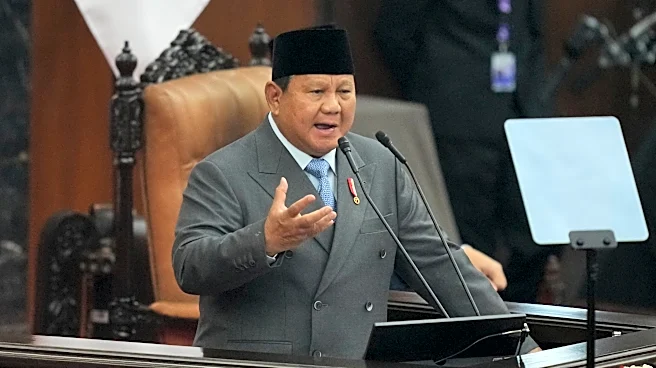
Indonesia's economic trajectory will be closely watched as the government aims for 5.4% to 5.5% growth in 2026 and an ambitious 8% by 2029. Future growth will likely depend on the government's ability to address investor concerns regarding fiscal plans and policy directions, as well as mitigating stock market downgrade risks. Continued support for manufacturing, particularly in value-added sectors like palm oil processing, is expected. The central bank's call for further strengthening of the domestic economy suggests that policy measures may be implemented to enhance resilience. U.S. businesses and investors should monitor these policy developments and the overall investment climate. The focus on economic expansion could lead to increased infrastructure projects and industrial development, creating opportunities for international partnerships and trade. The long-term goal of higher growth rates indicates a sustained effort to attract foreign capital and diversify the economy beyond traditional sectors.
Beyond the Headlines
Indonesia's economic performance, particularly its reliance on palm oil processing for fuel, touches upon broader global themes of sustainable development and commodity markets. While the biodiesel program supports economic growth, it also raises environmental considerations related to palm oil production and deforestation, which are often scrutinized by international organizations and consumers. The government's push for higher growth rates could lead to increased resource utilization and industrialization, necessitating careful balancing with environmental protection and social equity. The interplay between government policy, investor sentiment, and economic growth in a large developing economy like Indonesia offers insights into the complexities of global economic development. For U.S. policymakers and businesses, understanding these dynamics is crucial for fostering responsible and mutually beneficial economic relationships, considering both the economic opportunities and the broader implications for sustainability and governance.