


What's Happening?
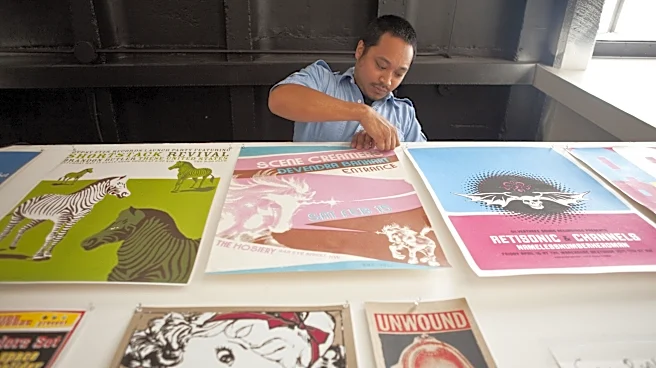
Punk rock icon Henry Rollins has launched a pop-up exhibit of his extensive collection of punk memorabilia in Nashville, drawing visitors from across the country. The exhibit, titled 'Cool Evidence,' features a wide array of punk posters, photographs,
and ephemera collected by Rollins over many years. After moving to Nashville five years ago, Rollins amassed this collection and initially considered opening a permanent punk museum. However, after evaluating the logistics, he decided on a series of traveling pop-ups globally. The Nashville event, hosted at RADAR gallery, is described as a blend between a '14-year-old's bedroom and the Smithsonian,' with walls filled with colorful posters, each accompanied by Rollins' personal written descriptions. Notable items include a hand-drawn poster for a 1979 Cramps show, a 1968 Polaroid of Iggy Pop, and Rollins' own Haagen-Dazs T-shirt from his pre-Black Flag days.
Why It's Important?
This exhibit is significant as it offers a rare, curated glimpse into the history and culture of punk rock through the eyes of one of its most influential figures. Rollins' meticulous collection and personal annotations provide unique insights into the movement, preserving its artifacts and narratives for both long-time fans and new generations. The pop-up format allows for broader accessibility, bringing punk history to various communities rather than confining it to a single location. The enthusiastic response from attendees, traveling long distances to see the exhibit, underscores the enduring cultural impact and legacy of punk rock. Furthermore, Rollins' dedication to preserving these items, even training with a Smithsonian preservationist, highlights the historical value he places on this subculture, elevating it beyond mere memorabilia to a significant cultural archive.
What's Next?
Following the successful pop-up event in Nashville, Henry Rollins plans to take the 'Cool Evidence' exhibition on a global tour, with aspirations for 2028. This touring format will allow a wider audience to experience his curated collection and personal insights into punk rock history. Rollins has expressed immense excitement about this project, indicating his commitment to sharing these historical artifacts with the public. The success of the Nashville event suggests strong demand for future iterations, potentially leading to more pop-ups in various cities across the U.S. and internationally. This initiative could also inspire other artists and cultural figures to share their personal archives, contributing to the preservation and accessibility of diverse cultural histories.
Beyond the Headlines
Rollins' decision to invest his life savings and personal time into curating and presenting this exhibit speaks to a deeper motivation beyond mere nostalgia. It reflects a commitment to historical preservation and the belief that punk rock, as a cultural phenomenon, holds significant lessons and artistic value. By sharing these artifacts, Rollins is not just showcasing memorabilia but also offering a narrative about rebellion, artistic expression, and counter-culture movements. The exhibit serves as a tangible link to a pivotal era in music and youth culture, allowing attendees to connect with the raw energy and DIY ethos of punk. This effort contributes to the ongoing dialogue about how subcultures are documented, preserved, and understood within broader cultural histories, emphasizing the importance of personal archives in shaping collective memory.