


What's Happening?
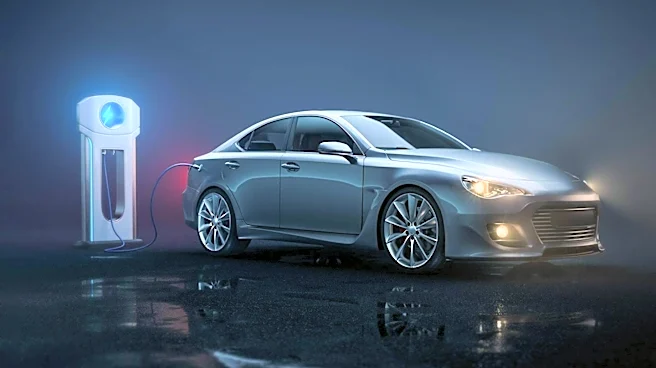
FAW Hongqi, a brand under China FAW Group, has announced the development of an ultra-fast charging battery capable of charging from 10% to 70% in just 3 minutes and 41 seconds. This new battery technology, developed in collaboration with China Automotive
New Energy Battery Technology, has completed performance tests and is positioned to outperform BYD's second-generation Blade Battery. The battery also charges from 10% to 97% in 8 minutes and 3 seconds. Despite these advancements, Hongqi has not disclosed a timeline for mass production or which vehicle models will first feature the new battery. The battery's design includes a highly efficient anode and a proprietary electrolyte, enhancing charge transfer efficiency and reducing internal resistance.
Why It's Important?
The introduction of ultra-fast charging technology by FAW Hongqi represents a significant advancement in electric vehicle (EV) battery technology. Faster charging times can address one of the major barriers to EV adoption—charging convenience. This development could enhance the competitiveness of Hongqi's EV offerings, potentially increasing market share in the growing EV market. The technology also highlights the ongoing innovation within the Chinese automotive industry, which is rapidly advancing in battery technology. As global demand for EVs continues to rise, advancements like these could influence the strategies of other automakers and battery manufacturers, potentially leading to broader industry shifts.
Beyond the Headlines
The development of ultra-fast charging technology raises important considerations regarding infrastructure and energy consumption. As charging times decrease, the demand on charging stations and the electrical grid may increase, necessitating upgrades to existing infrastructure. Additionally, the environmental impact of producing and disposing of advanced battery materials remains a concern. The industry will need to address these challenges to ensure sustainable growth. Furthermore, the competitive landscape in the EV market may shift as more companies develop similar technologies, potentially leading to price competition and increased consumer choice.